Danielle Ackley
Is a natural builder. Danielle and her partner, Greg Allen, run The Mud Dauber School, a natural building school located in central North Carolina. They also do private design/build for clients.
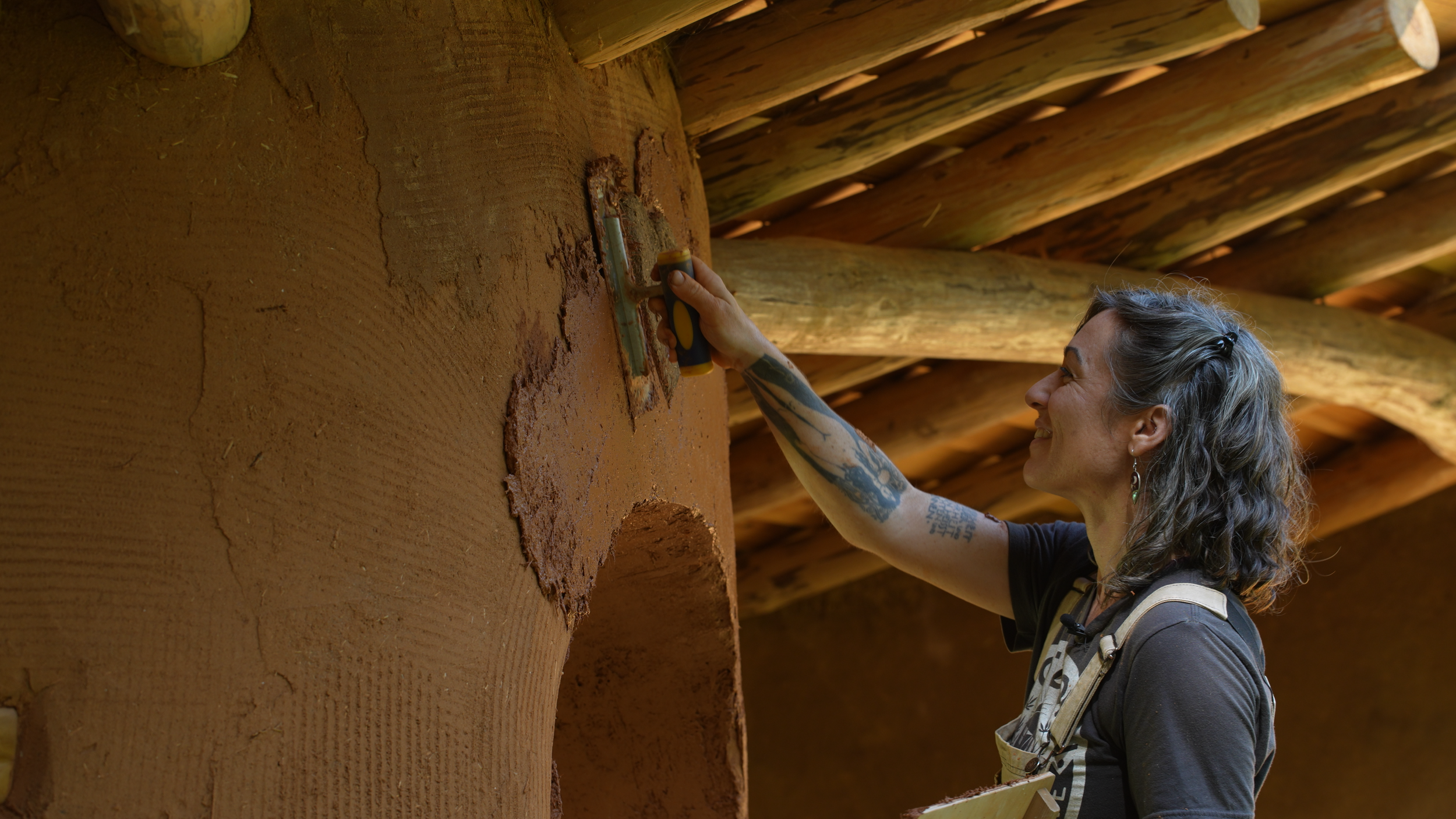
I always wanted to build my own house. A lot of how I got into natural building was rediscovering that interest as an adult
I always liked making things.
As a kid my favorite TV shows every Sunday were This Old House and The New Yankee Workshop. I watched them religiously. I was like—I want to be an architect.
What I think I really meant was I want to build houses. But in those shows you didn’t see a woman building, so I don’t think it necessarily occurred to me.
My dad had a drafting table,
so in kindergarten, I would roll out the paper, bring out all the stencils, make all these floor plans, and then roll them back up. I just loved it.
What I liked about the architectural drawings was getting to use the tools. I can picture it in my mind and I can feel it in my memory—the feeling of that little toolbox.
The way that it opened and the way that the drawers with the stencil slid out and the way that the drafting pencils were different.
I don’t actually remember what my plans were, but I loved how it felt to use those little stencils.
I loved the tilt of the drafting table and how the paper stayed down, and I loved how the paper rolled up into a tube.
Those are the memories as a kid where I felt the most dreamy and inspired. When I was making things. I felt that way when I was learning to sew—this feeling of making something.
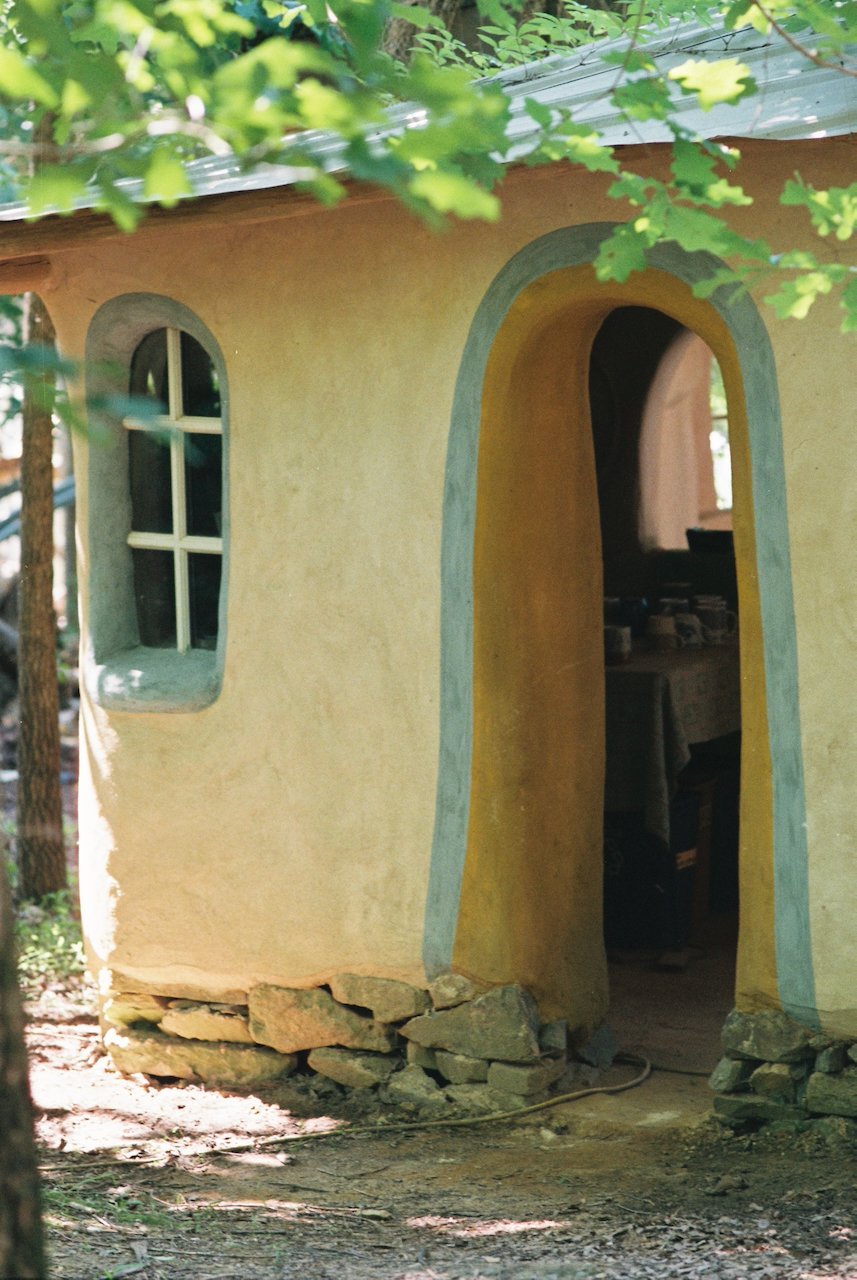
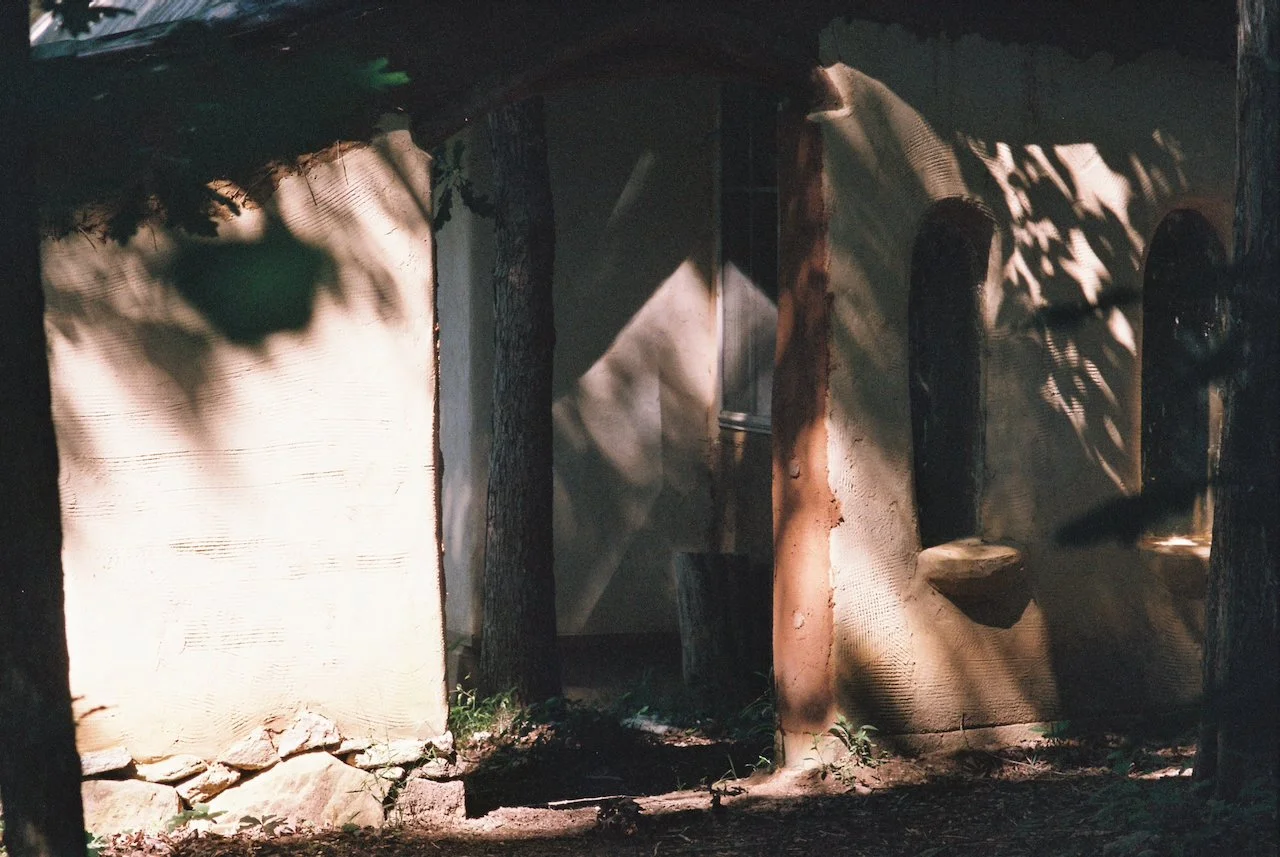
I was always small—5’2”. I’m not a big strong person. So I didn't see myself doing these physical things.
I didn’t know that I could be good at it.
When I started working with my hands again
I realized I actually could be strong enough. It wasn’t that hard.
At first it was tiring, and then quickly, doing the same thing, you build up the strength.
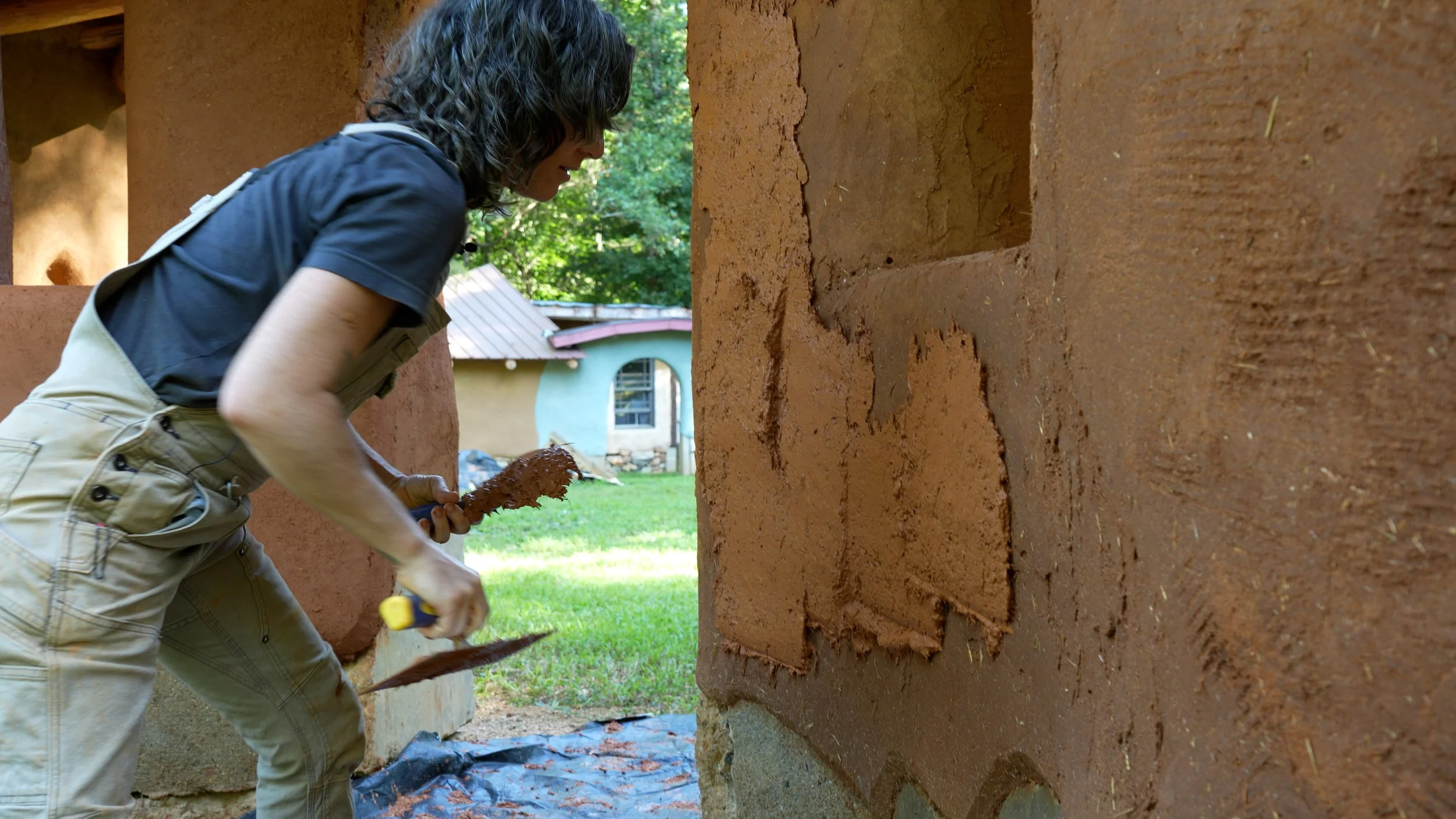
I found a book called
The Cob Builder’s Handbook by Becky Bee. I had no idea that you could build with earth, and it blew my mind. I was like—”I’ve always wanted to build my own house, and now I know how I want to do it. I want to build with the earth.”
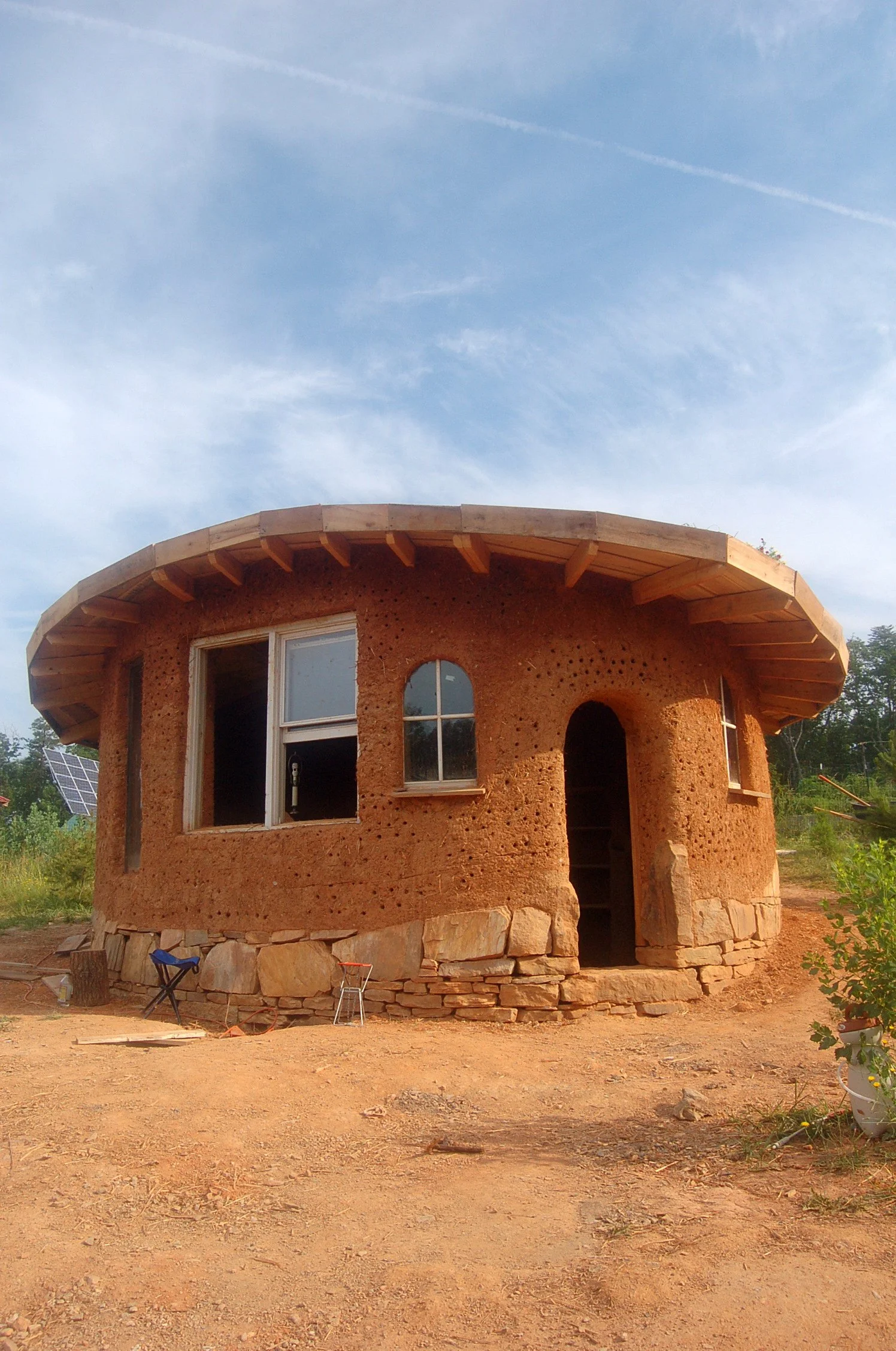
I found a cob workshop.
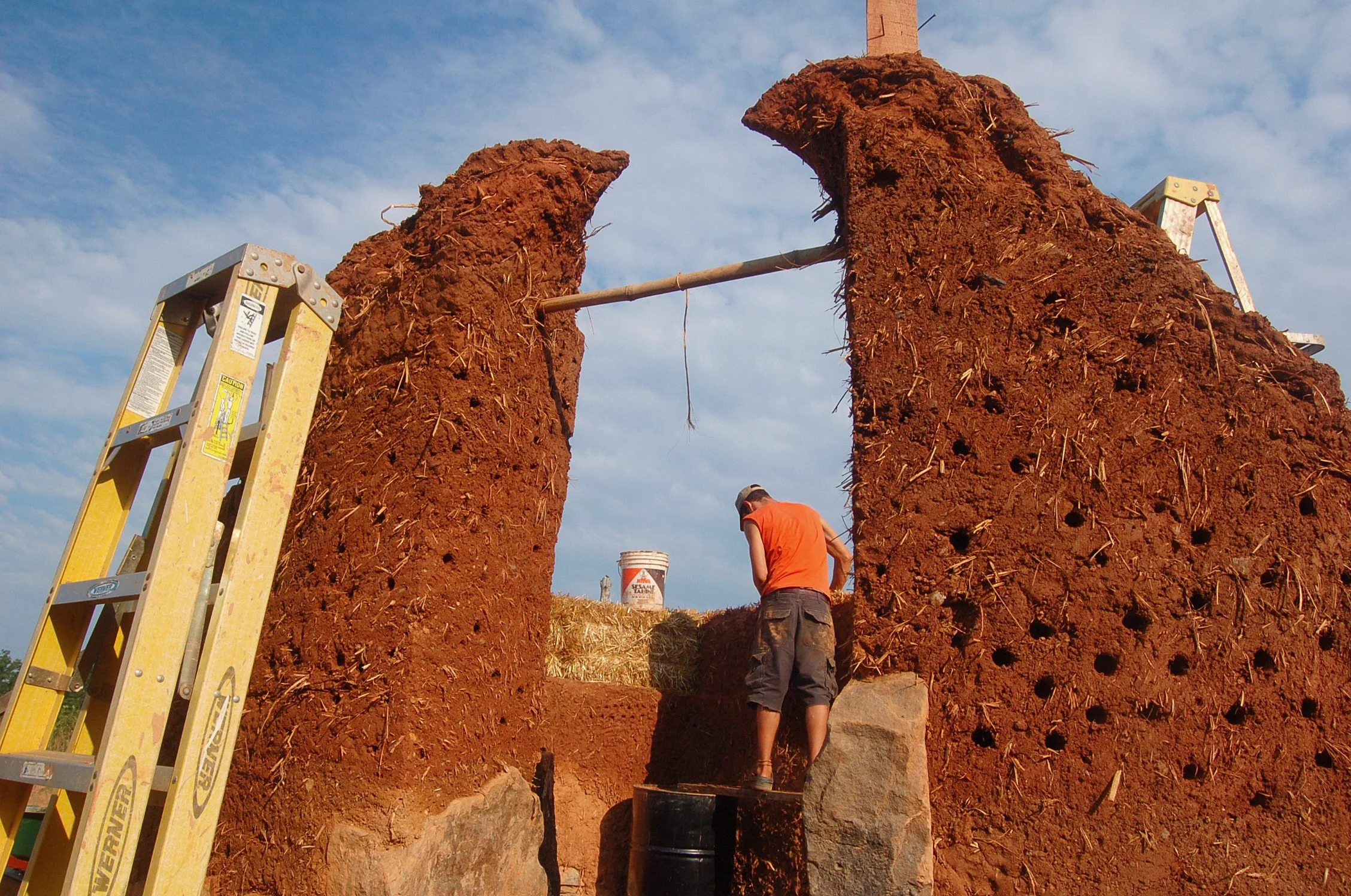
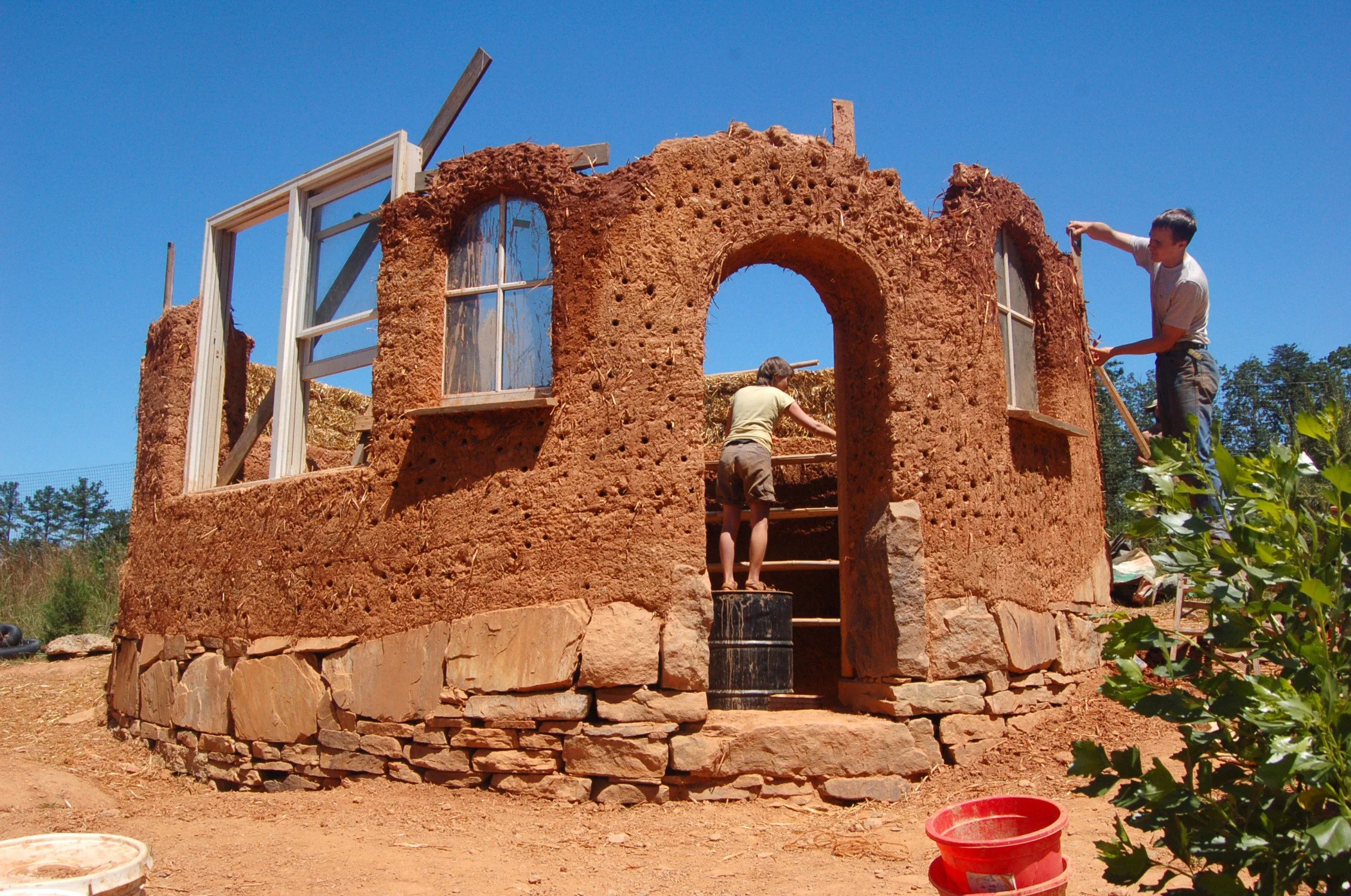
We were on this little mountain top
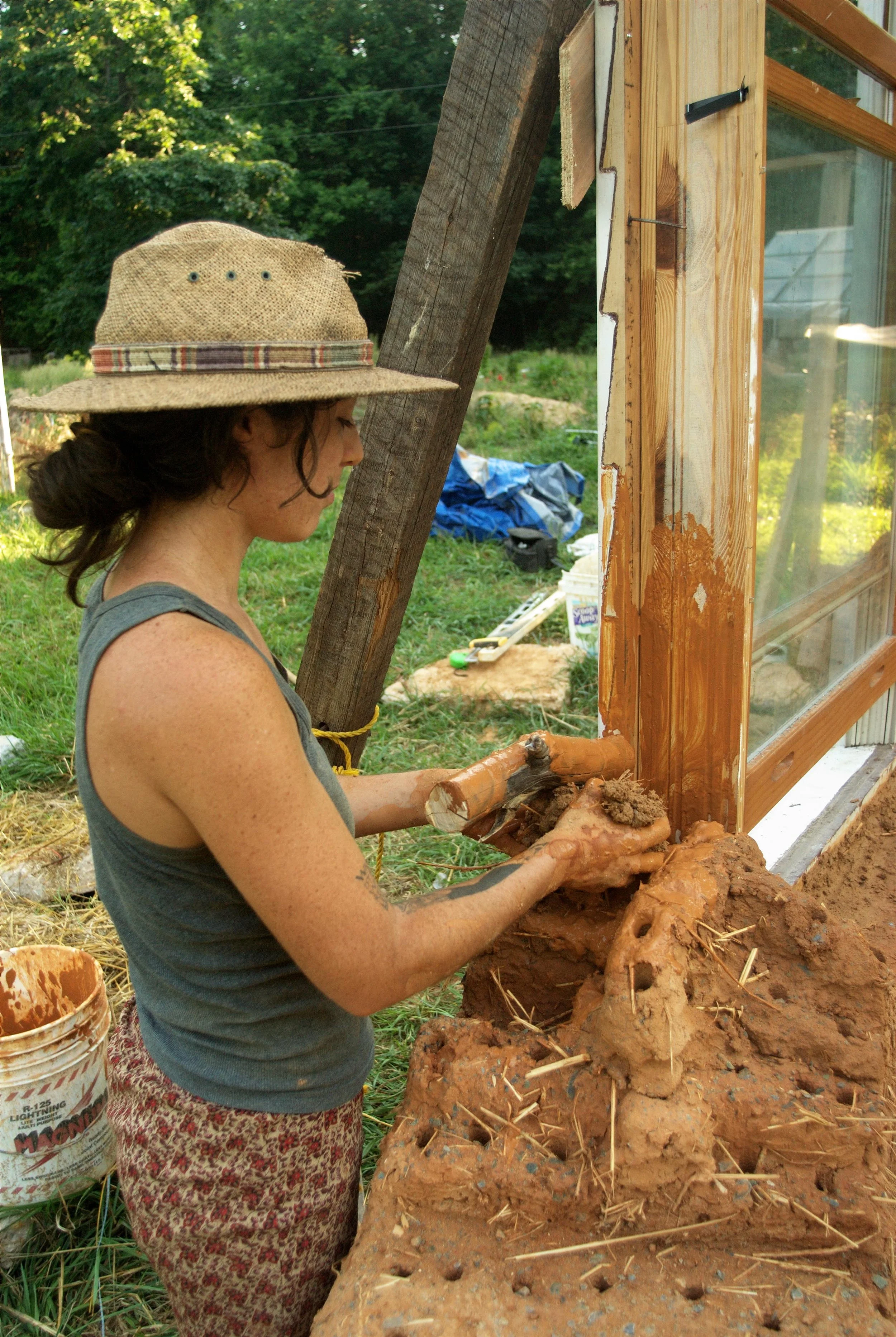
mixing the red clay with our feet and screening the stones out with the shovel and coming up the hill with the wheelbarrow.
Pretty much all we did was laboriously foot-mix cob that had tons of shards of quartz in it.
We set up the walls, and by the last day we were putting in some windows.
I loved it.
I went back afterwards
I was like—”Can I come back? Can I do more? Can I build the roof?” So I got to volunteer until it was finished.
I got to pour the earthen floor and do the clay plaster and help put the roof layers on.
I was invested.
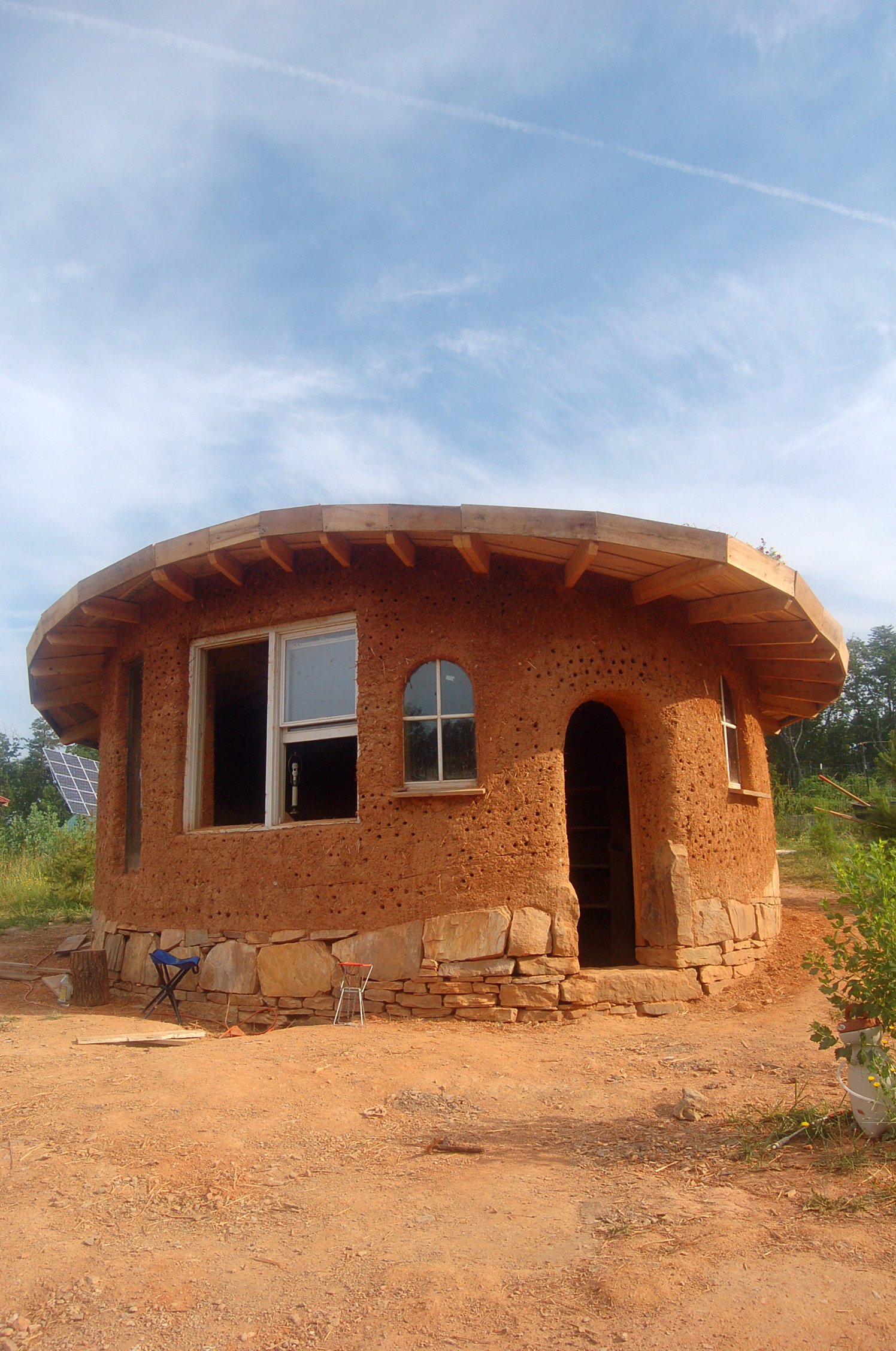
It’s when you feel: This is what I want to do. And then you do it.
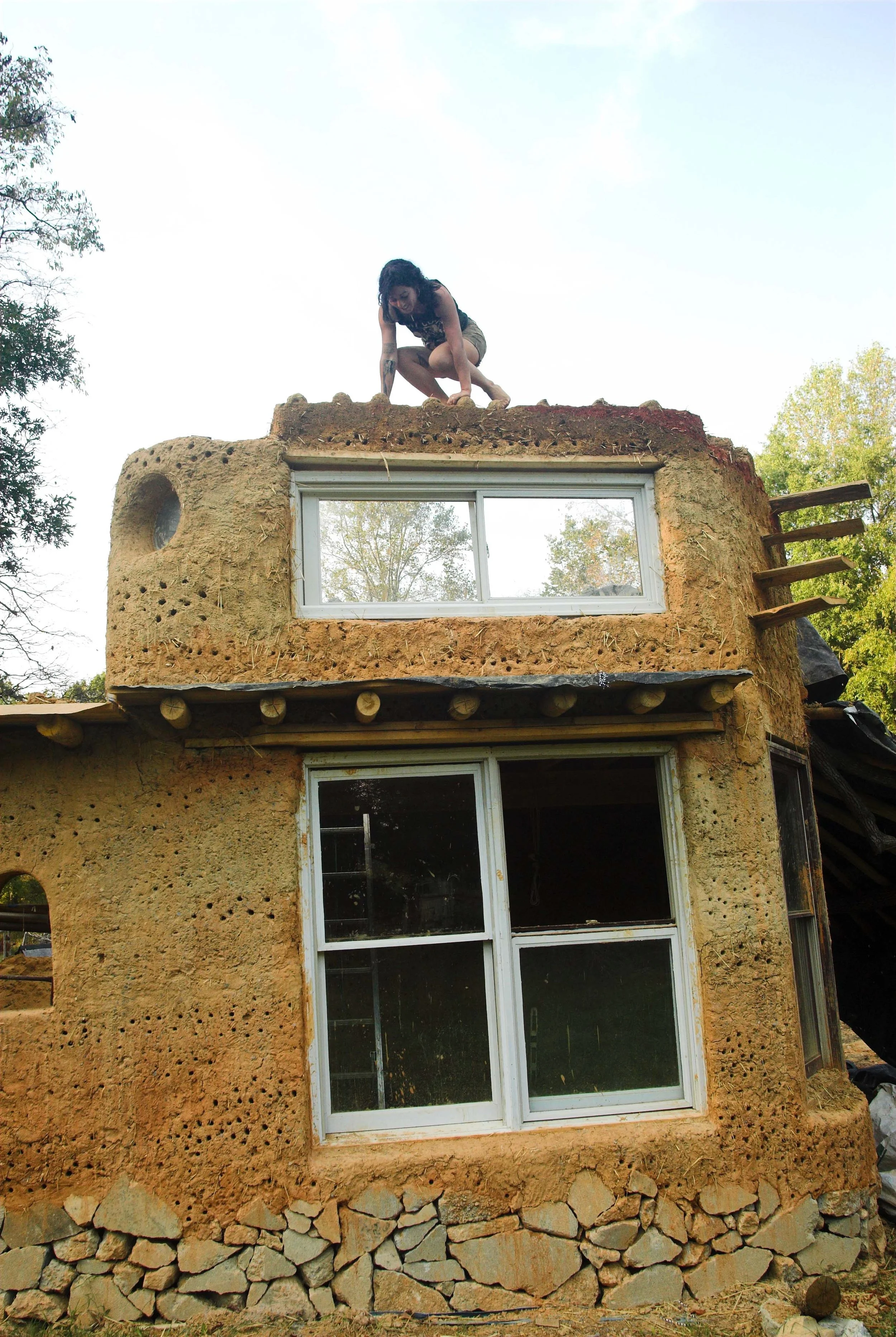
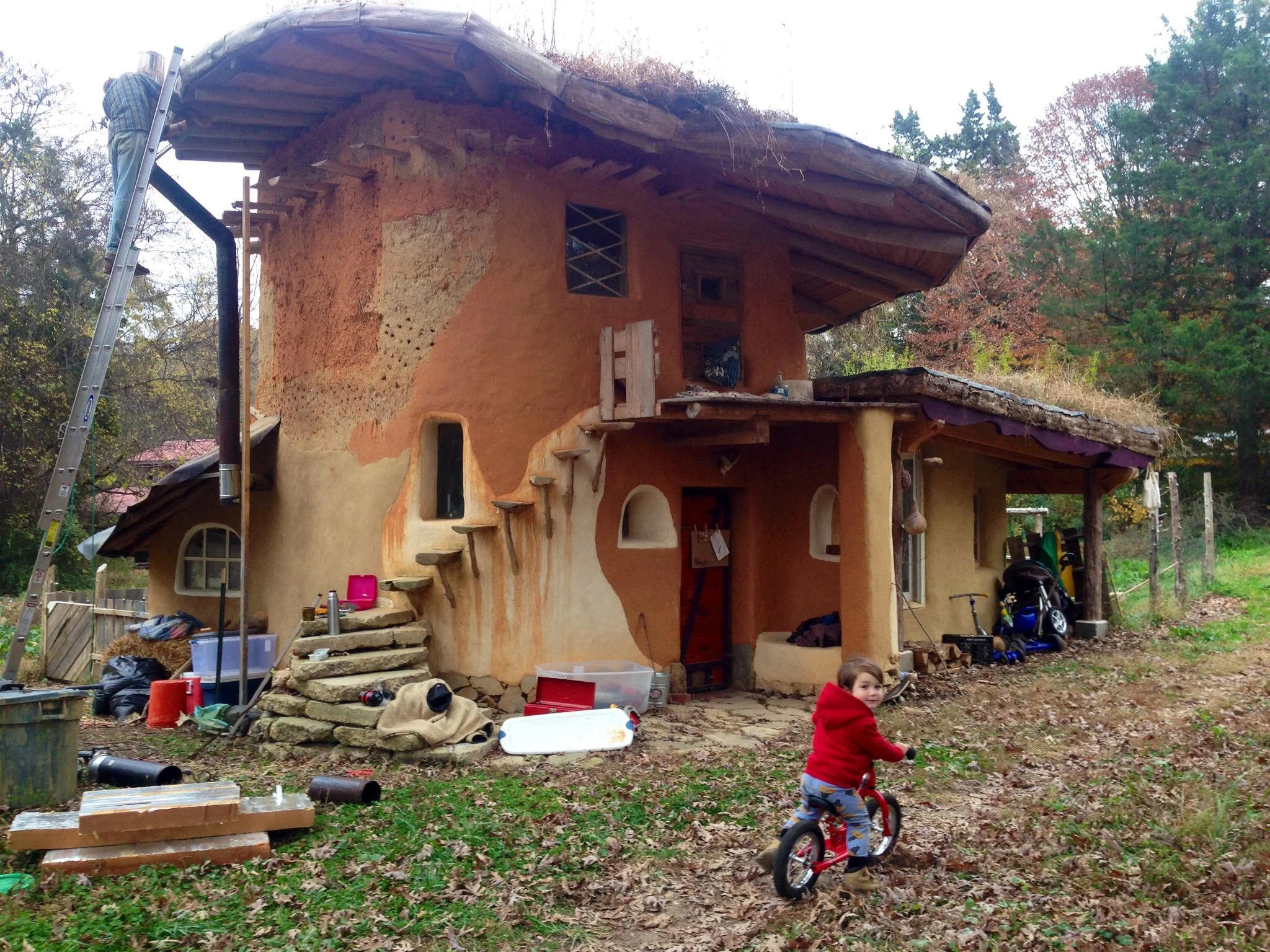
So I built my own little cob house, and that’s how it all started. Realizing—Oh, I can do this after all.
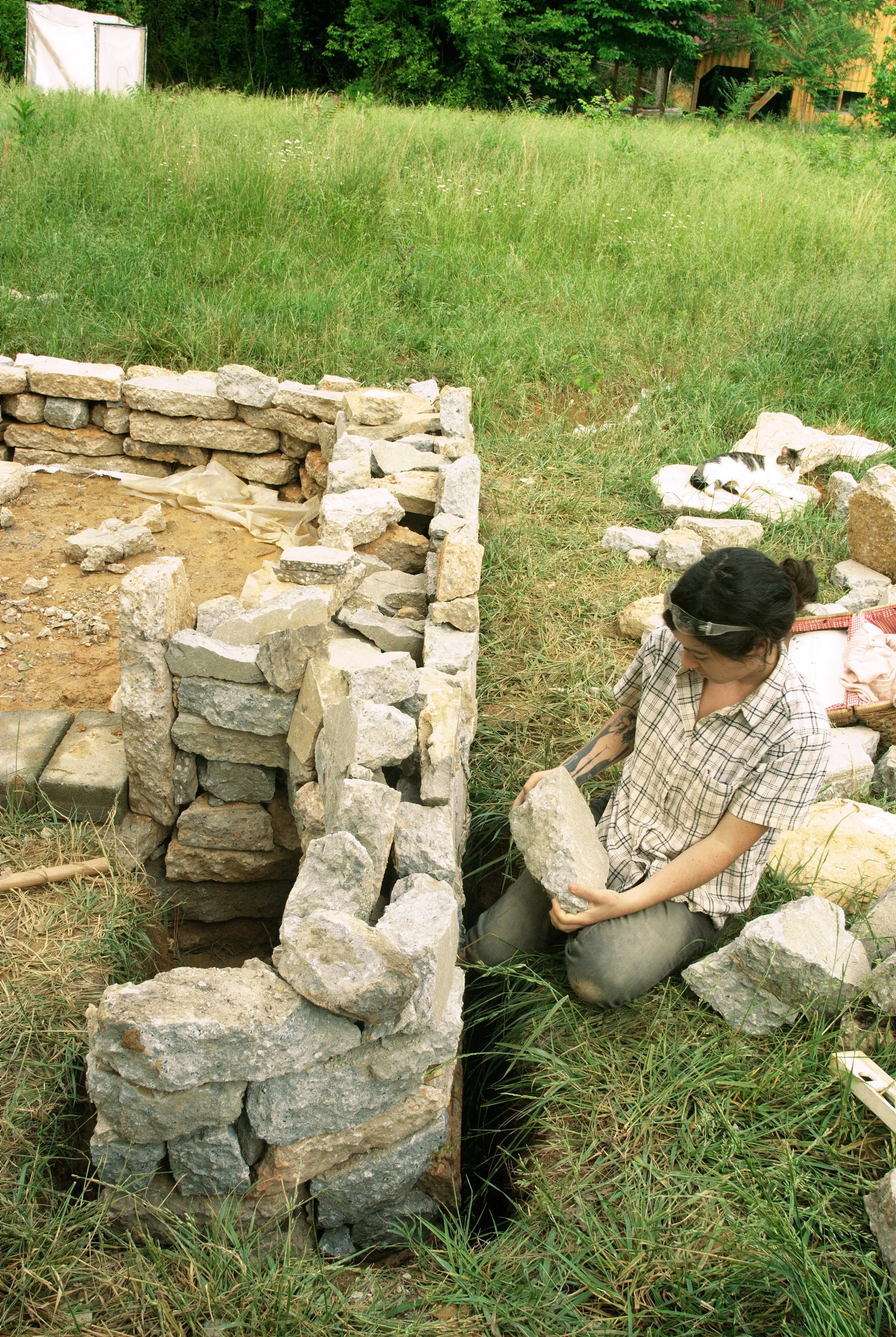
It’s the things you do where you feel like you’re in a flow state or you don’t realize how much time has passed. You feel so excited to do it again the next day.
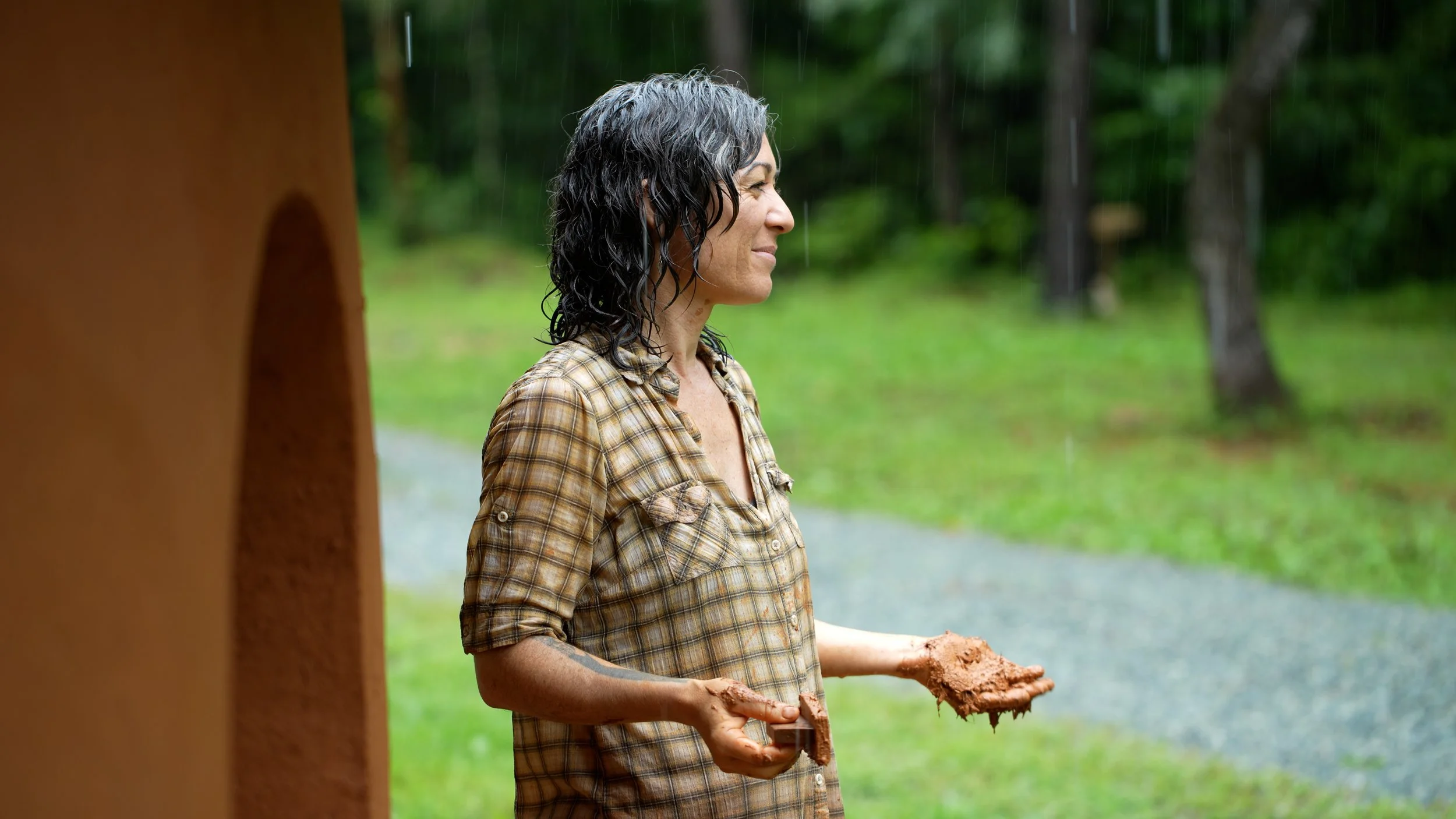
That’s how I felt. Like I could stomp on this cob all day long, even though I’m exhausted because that feeling of ‘I have made this much progress on my wall,’ is just so exciting to me.
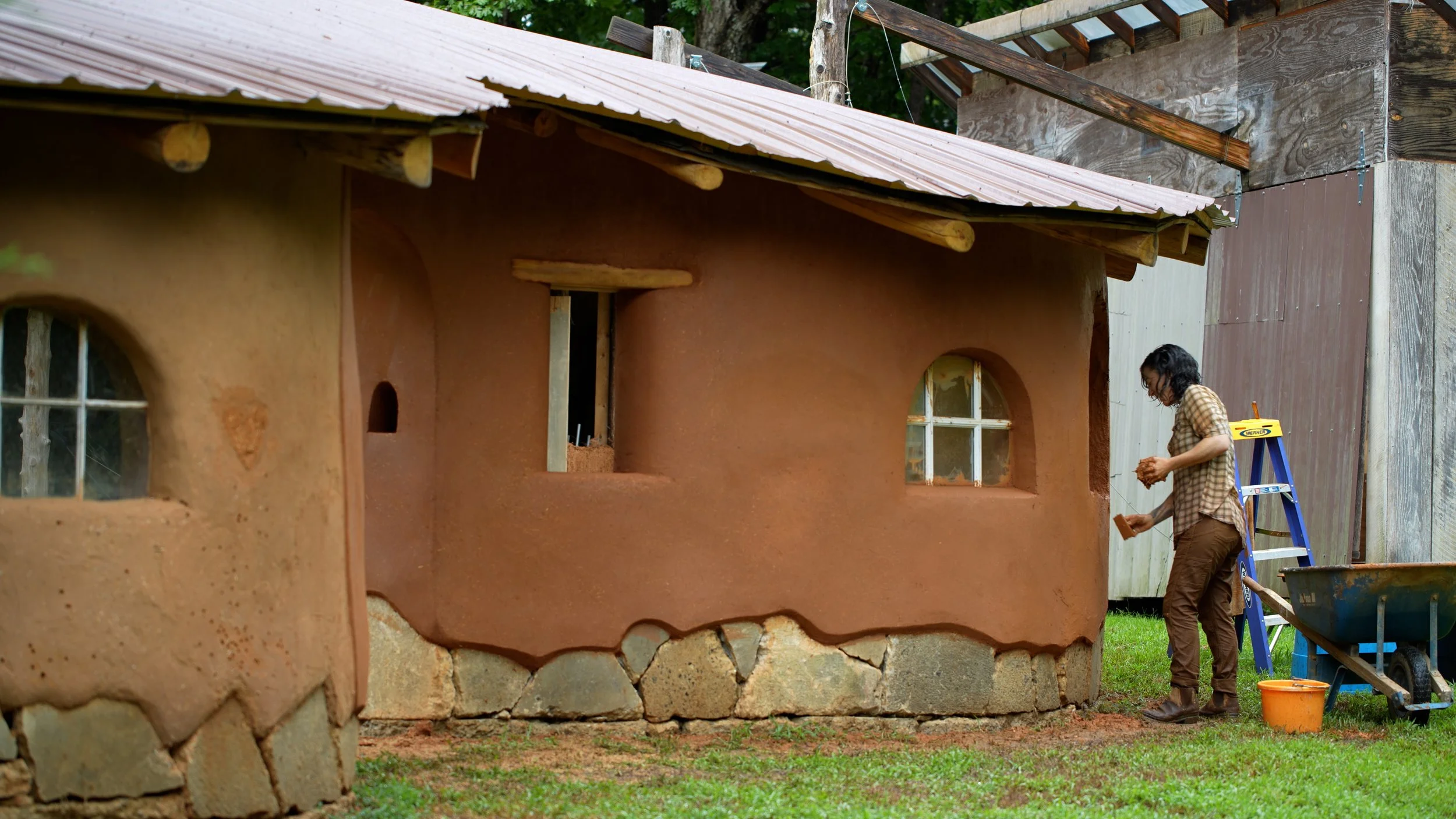
I still lose track of time when I’m plastering or building something because I just get so excited. It’s that feeling of—you feel like yourself; you just feel at peace.
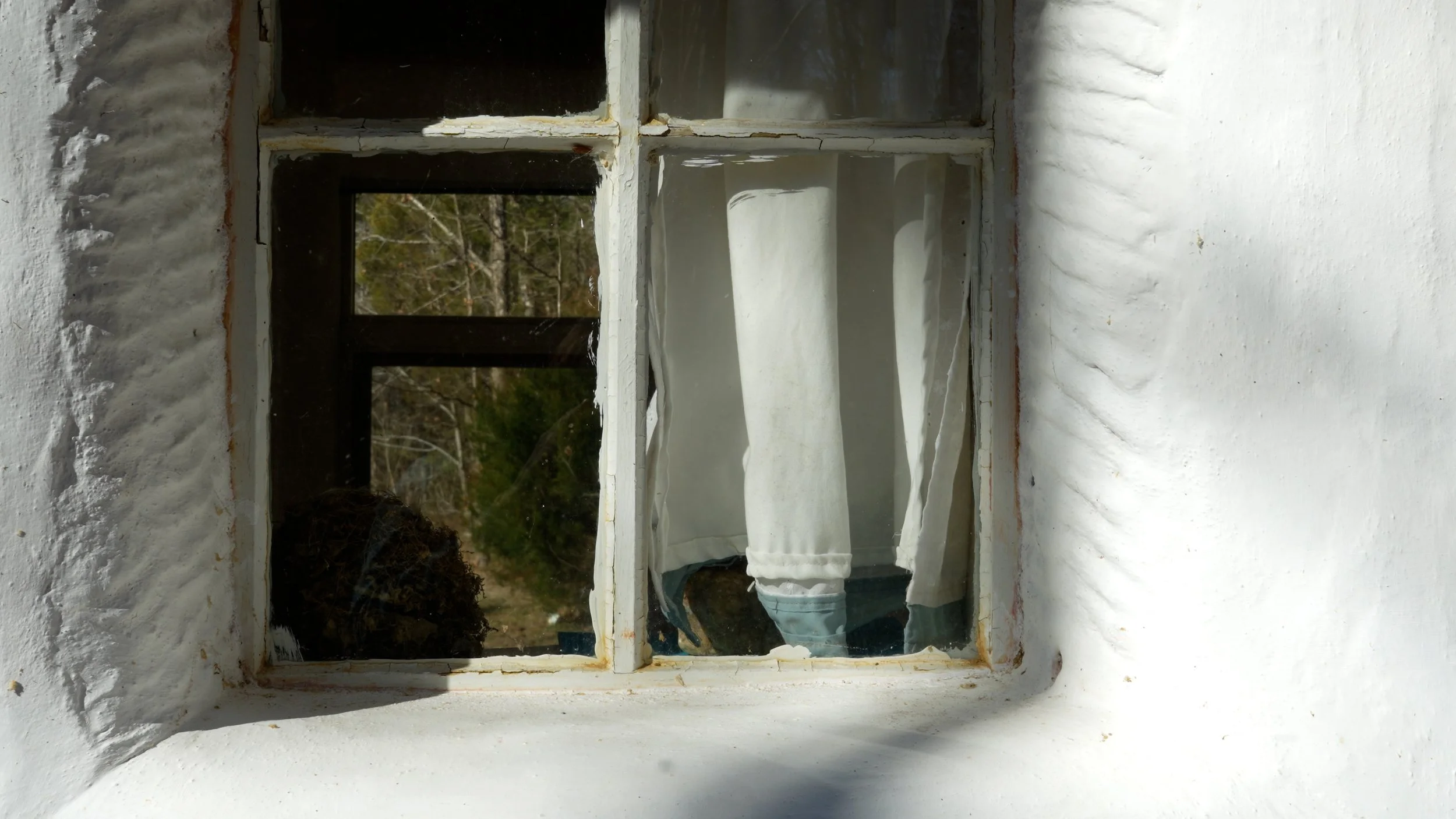
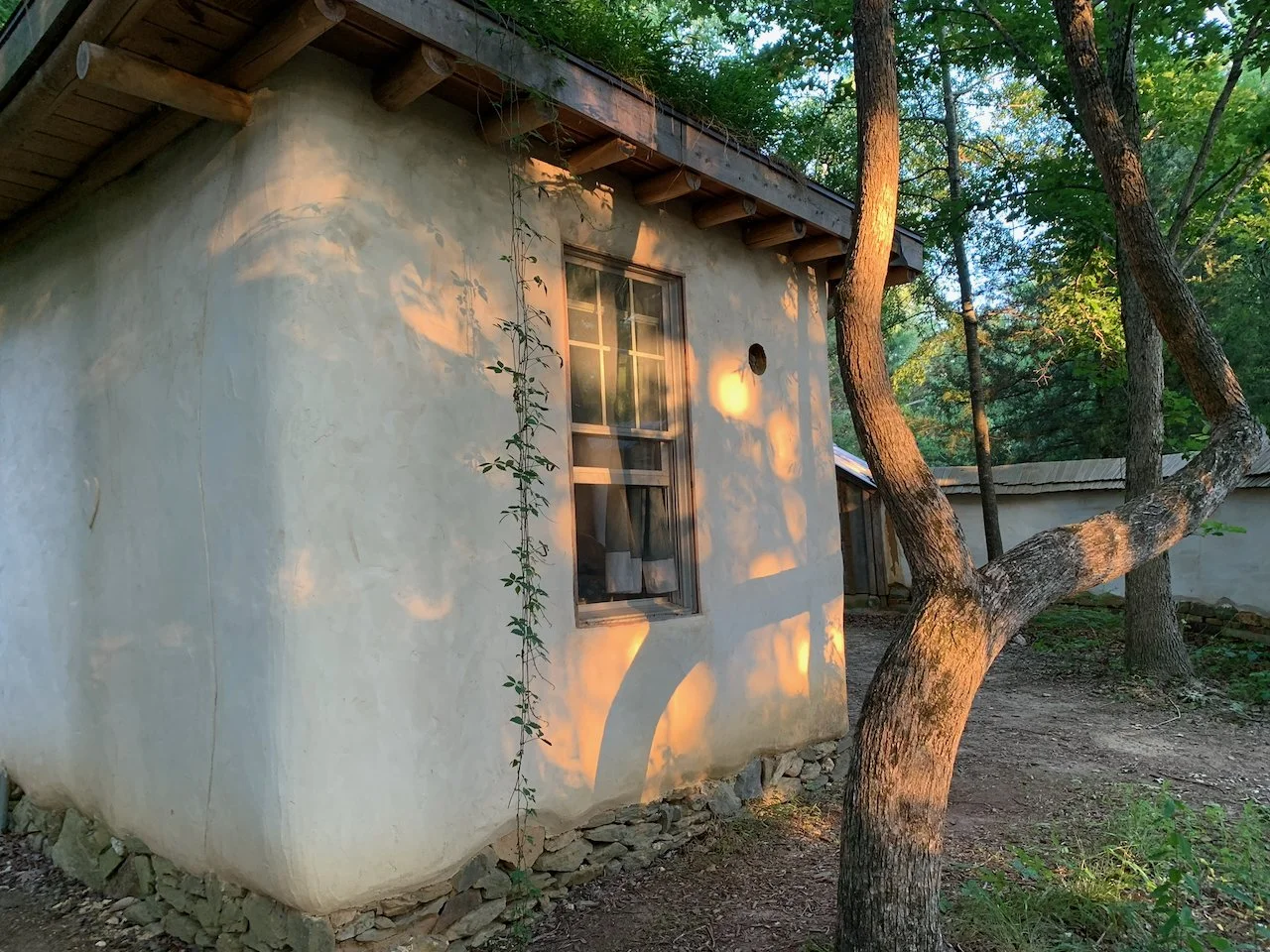
I wish I could go back and remember what was hard and confusing. I remember little things like using the level to make sure you’re building your wall plumb. My mind is so nitpicky and detail-oriented, it was hard with this rough surface of the wall.
I think I was trying to make everything perfect. So everything I did I did slowly.
When you’re learning something sometimes you don’t know what’s good enough—my mind just goes overboard.
So I think that part of the learning curve is being able to zoom out and see the big picture and not the little details.
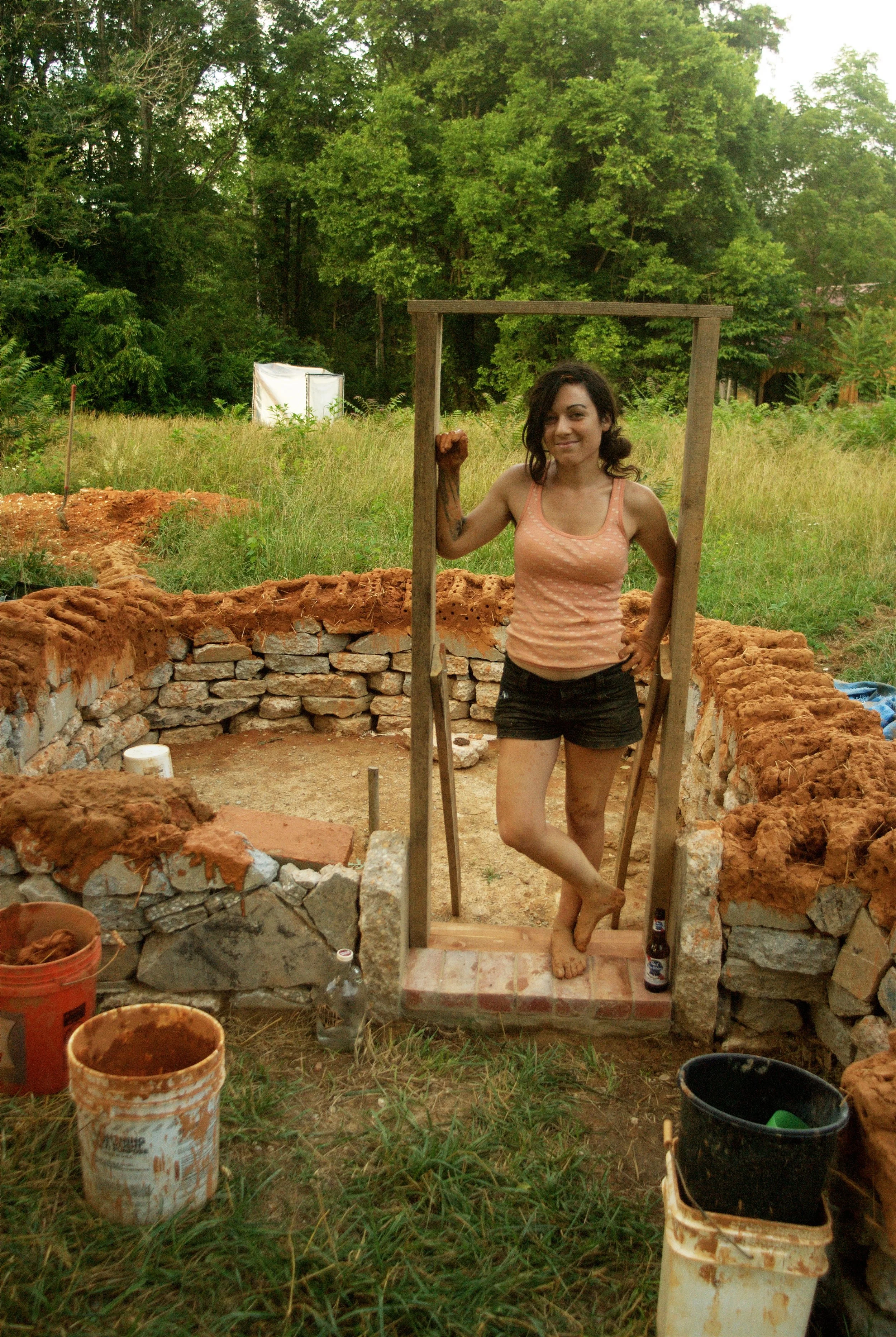
I was so intimidated by the parts that involved minor carpentry, which is so funny to me now. I had all these moments of: I've got to have someone show me how to build a door frame.
My friend took four pieces of wood and put them together into a rectangle and I'm like, “Oh, okay.” I didn’t know how to put in a floor system—I was so overwhelmed.
And then you put in these two ledger boards that are level to each other and we’re putting in these joists.
In a way, it was a surprise that it was intuitive and logical.
Which I think is something slowly I’ve discovered as an adult is that so many things are like that—
We just think they’re hard until we start to do them.
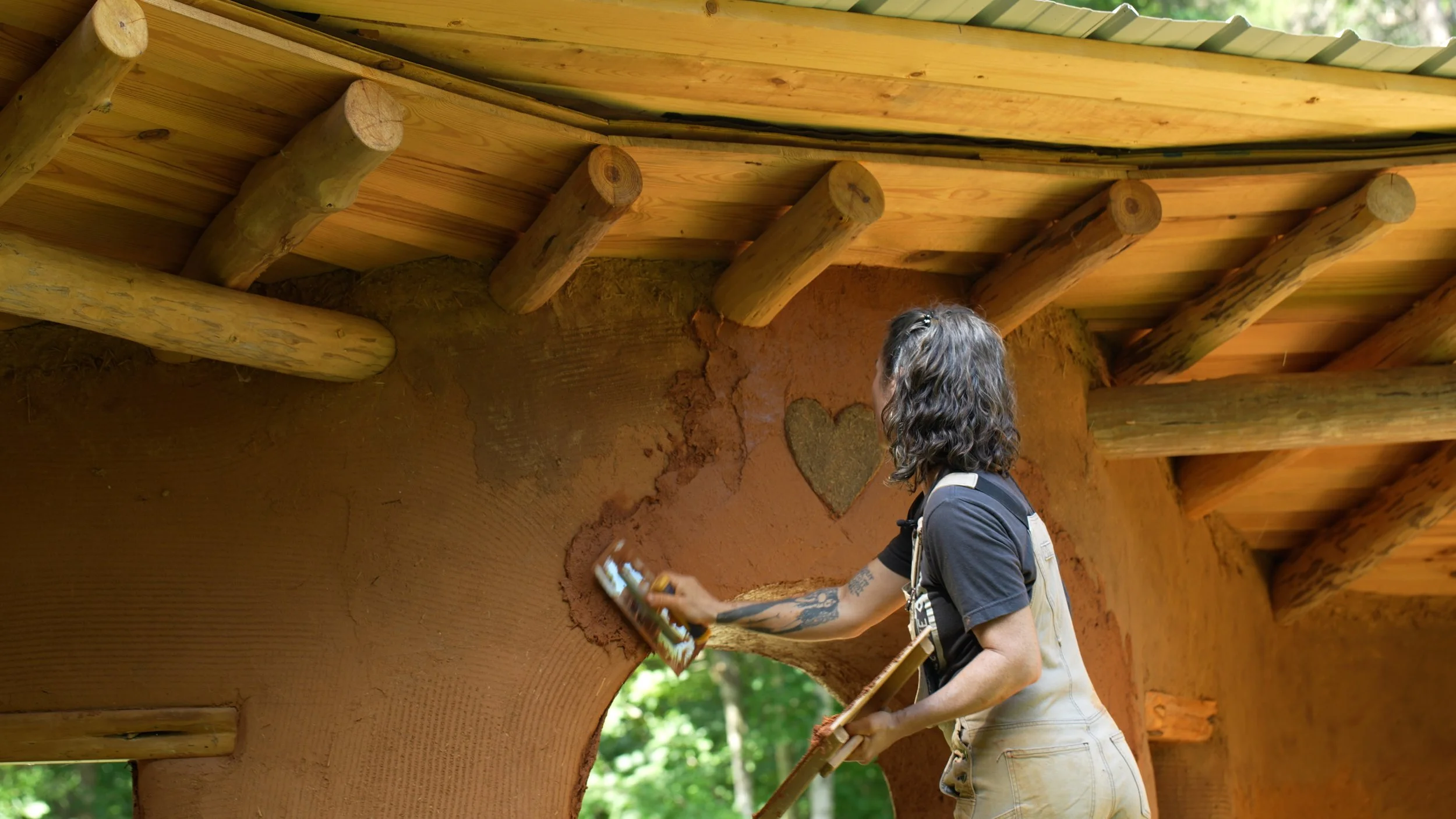
Lots of things
that have to do with working with your hands are logical because they follow the physical properties of the world—there is this intuitive understanding of what is stable and what is not stable.
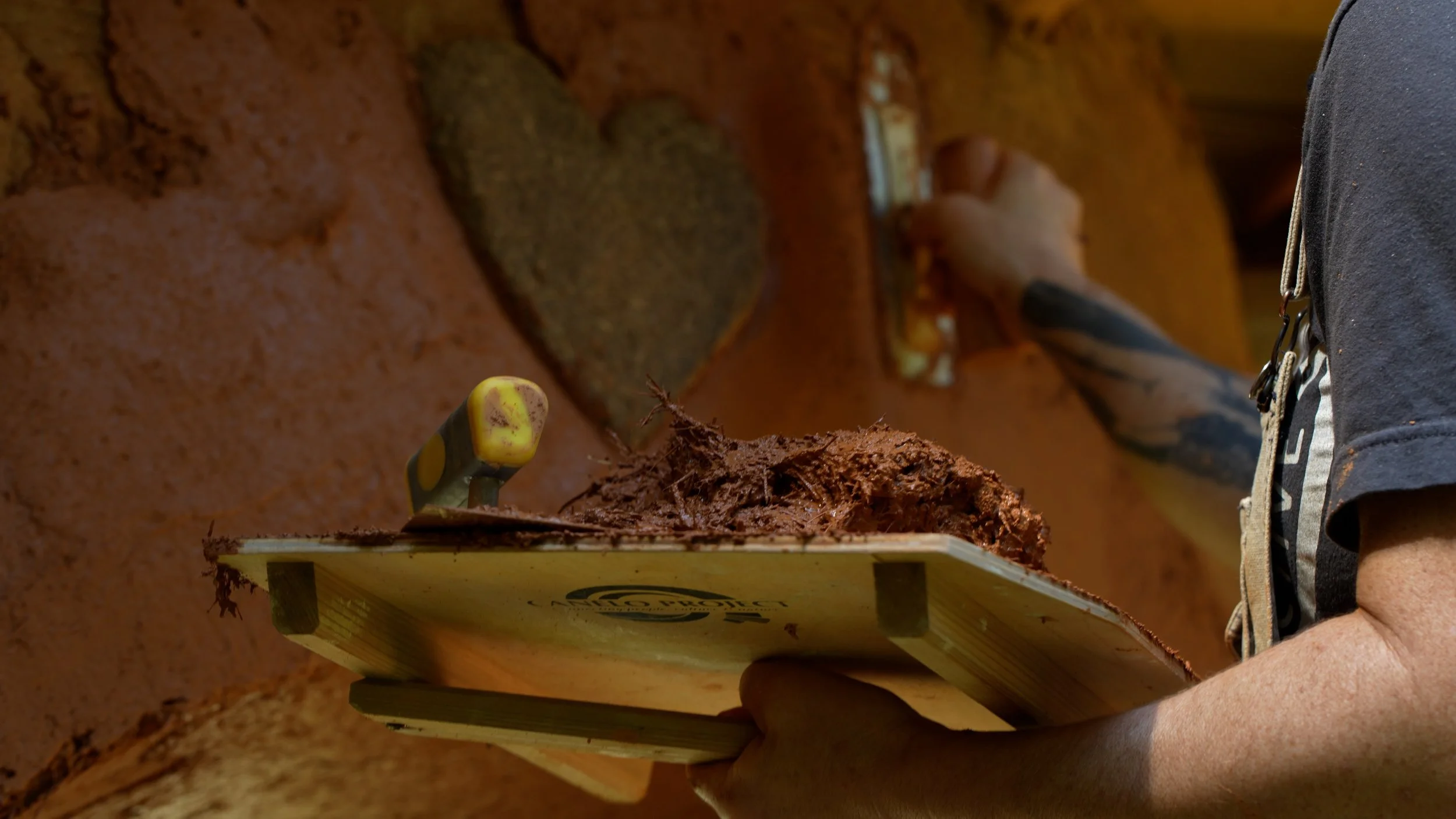
I started taking a community college continuing woodworking class. I had never done woodworking. I'd never used those tools, other than I’ve crudely cut wood on a table saw or used a circular saw. But I had never used a bandsaw, and I was nervous.
And then I did it, and the teacher was like, ‘It's perfect.’
It was exactly like sewing; you have to learn to keep your eye on the needle and when you curve, don't go too quickly.
There’s so much overlap in doing these things in the physical world.
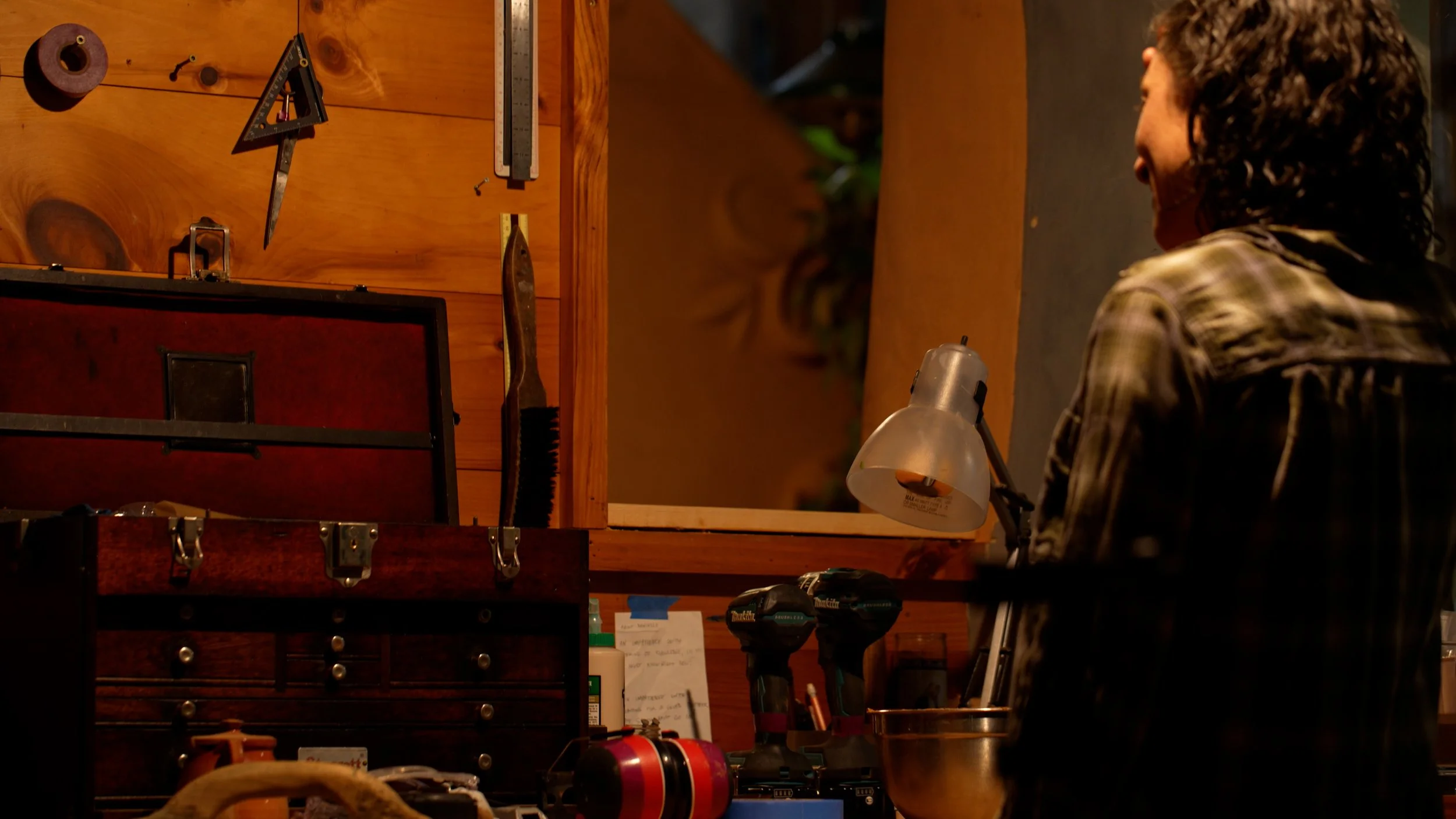
We’re all doing these physical tasks within the properties of how things move through space. The laws of physics don't change.
If you've decorated a cake, you know that materials of this viscosity move in this way.
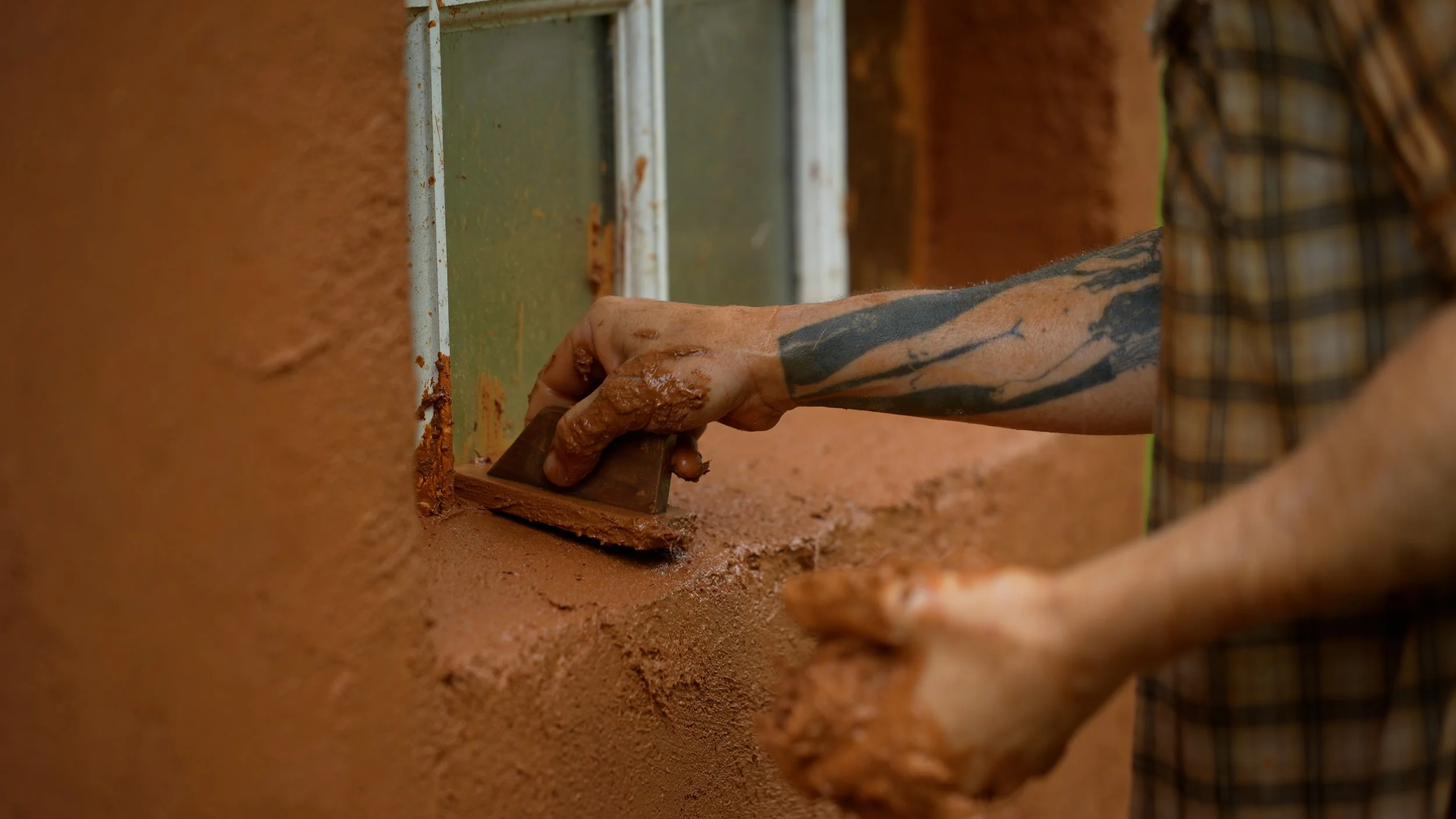
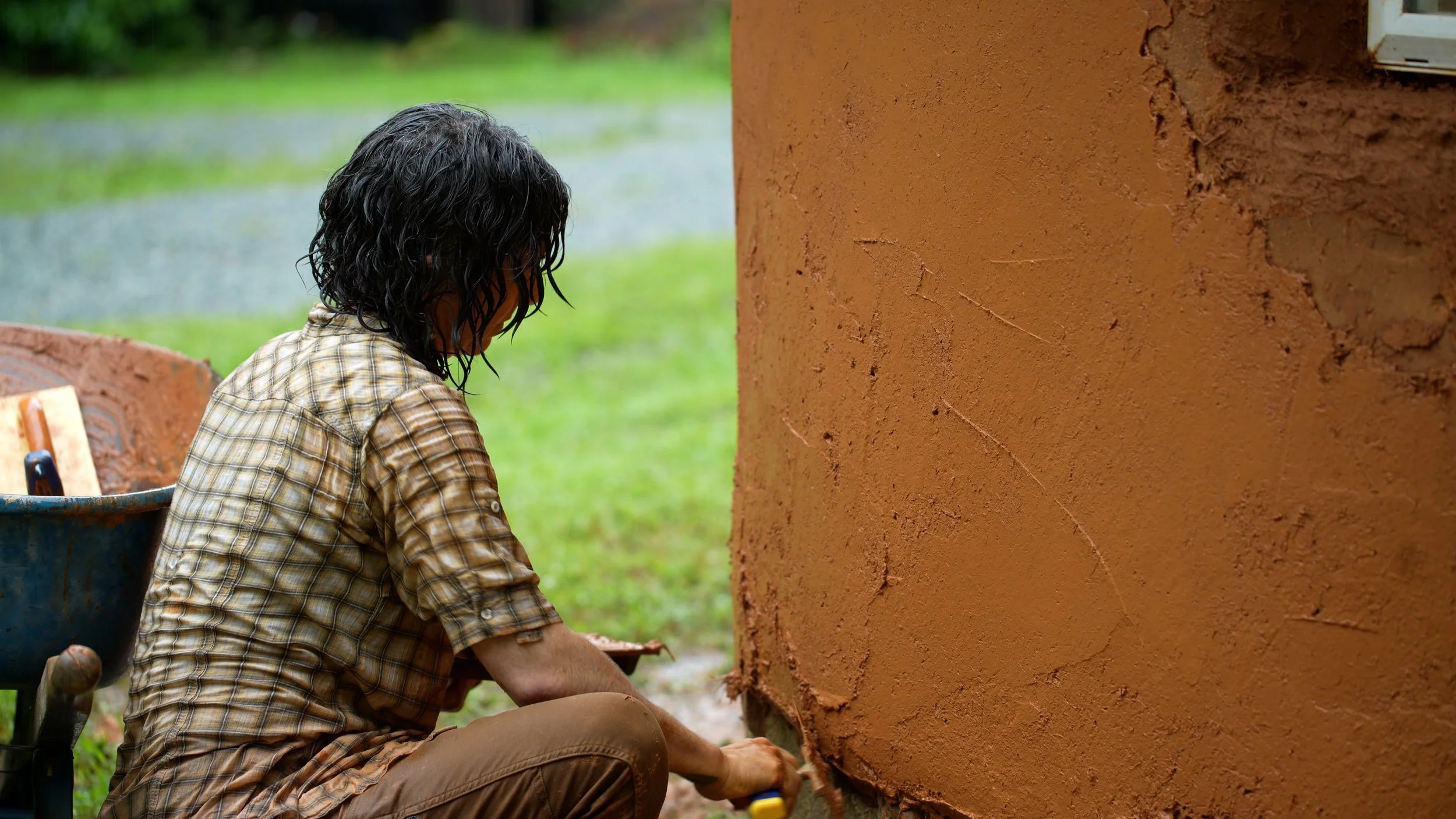
I have a little icing spreader, and I put it in my box of trowels because it is so useful if I need to get in a little spot and I don’t have a margin trowel.
You can't help but make baking analogies when you're doing it because the same things apply.
We're going to mix the dry ingredients first and then we're going to add our liquid.
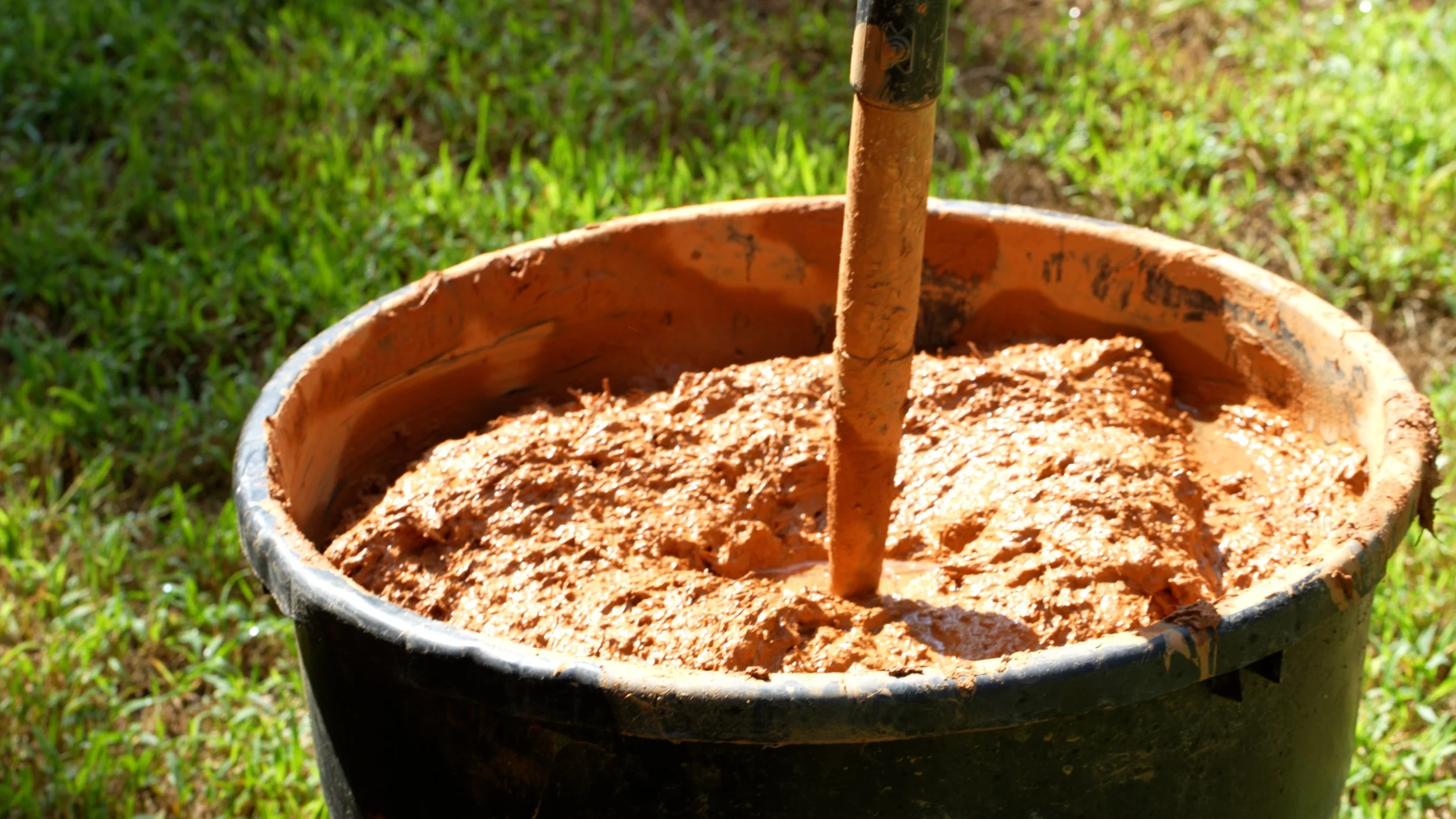
And then at the end we're going to put in the chunky straw like you add your nuts in chocolate chips at the end of your banana bread recipe.
That's what makes sense when you're mixing dry and wet and chunky things.
It's just the same
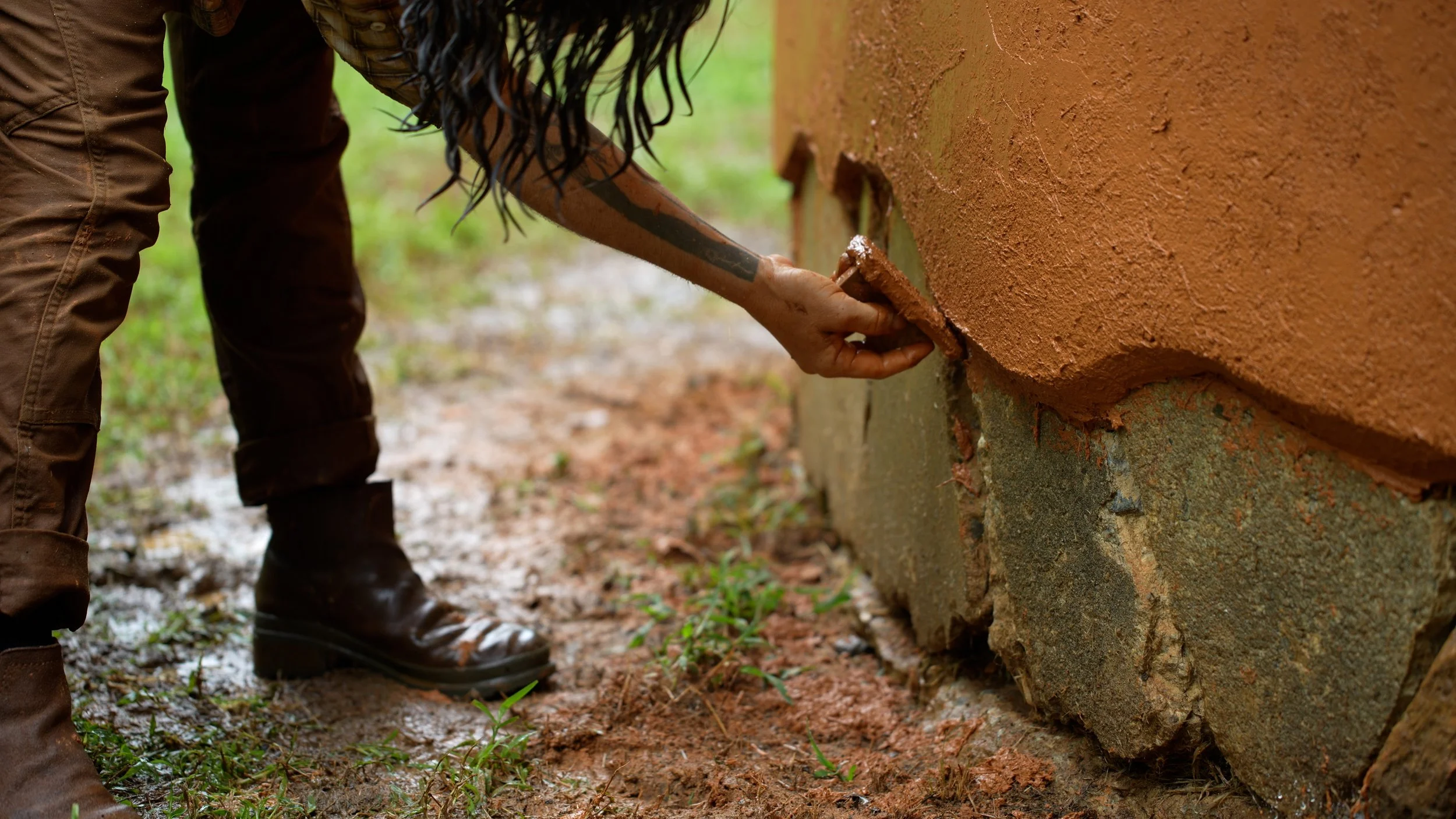
Years ago I was talking to my friend. He had built this super cute 400 square foot house—conventional.
I was asking him different things. I was like—”What about this? Was this hard?”
And he looked at me and was like “Danielle, nothing’s hard. You just have to learn it first.” And I was like “Oh! You’re right.”
Sometimes,
people say these little things to you and they get stuck in your head.
That pops into my mind all the time. Just the other day I was thinking of something and I was like ‘Oh, well, nothing’s hard, remember? You just have to learn it first.’
It’s nice to have those things become part of your inner voice.
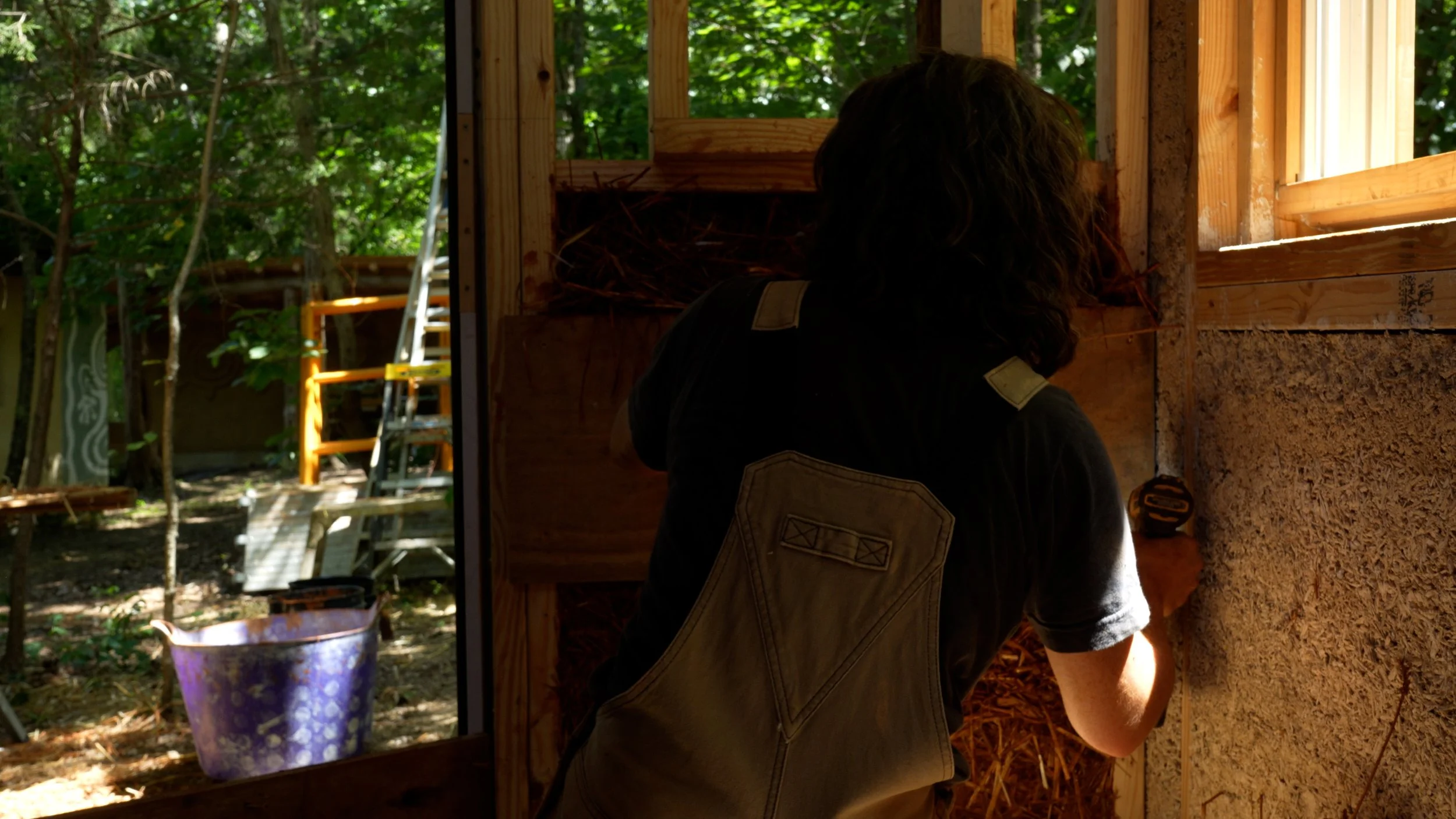
The hardest thing I’ve ever done
is be a parent. And now when I do anything else I’m like oh, this is easy.
Even physically, I gave birth, and that was the most physically demanding thing my body has ever done. I found every ounce of physical strength to do that, so now I’m like ‘I can do all these other things no problem.’
It’s just funny. We have all these stories we tell ourselves about what is hard, and I think so much is just realizing that they’re all stories.
One of the things I'd love to do
is come out with a set of tools that are designed for smaller people.
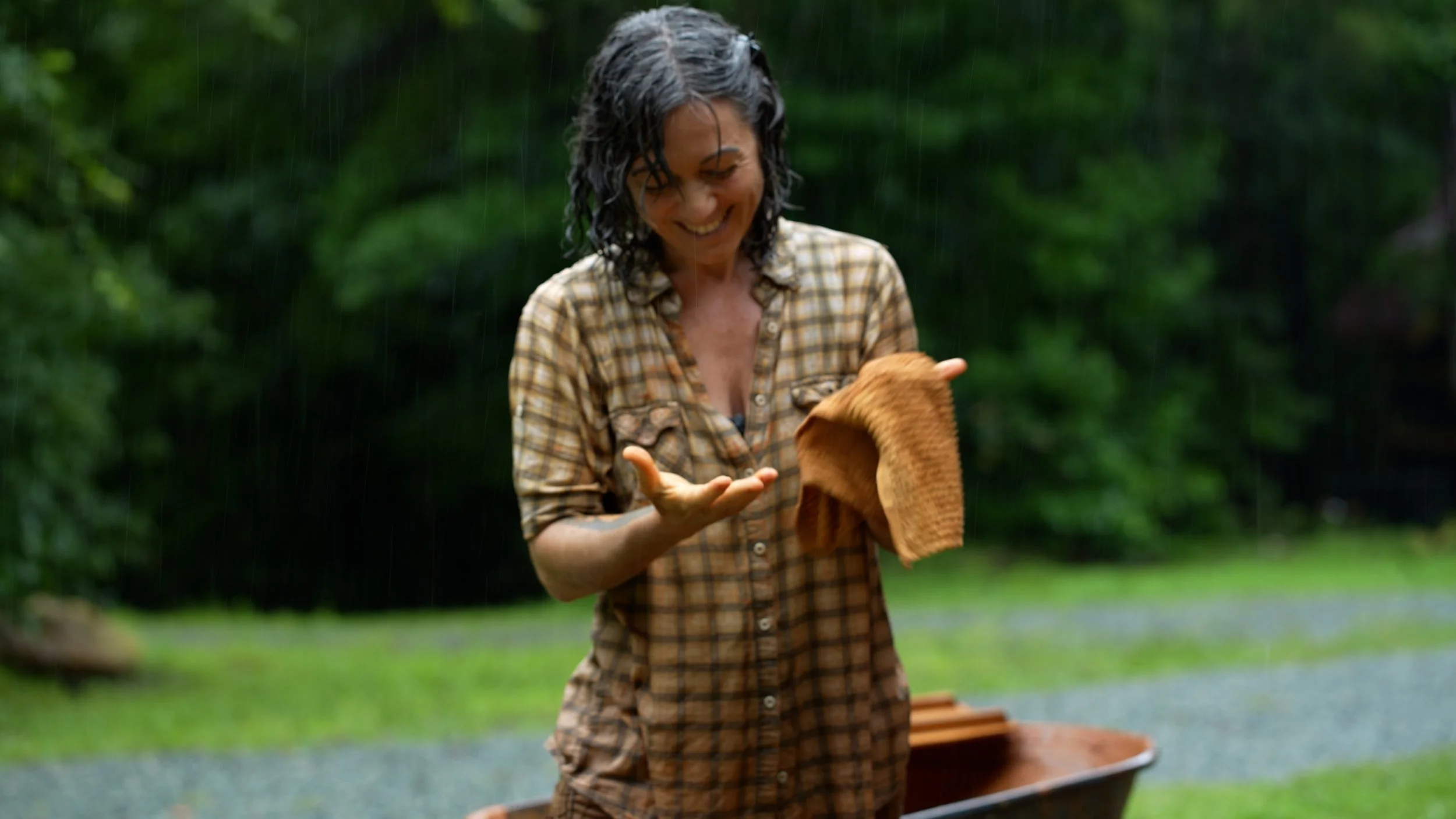
So many things are designed for someone who is one foot taller than me.
Even weed whackers: the length of the cord that I have to pull before it starts. Even dig bars are a little long; they're for taller people.
When you have the right tool, everything is easier. I truly didn't know how to use a trowel, so when I was first plastering, it was weird and tedious and took forever.
I was more interested in the wall systems; plastering was this annoying thing that I had to do in the end. I was smearing it on with my hands and smoothing it with a yogurt lid.
And then my friend Joelle visited, and she brought Japanese trowels. That was when I first was starting to like plastering because I actually had the appropriate tools.
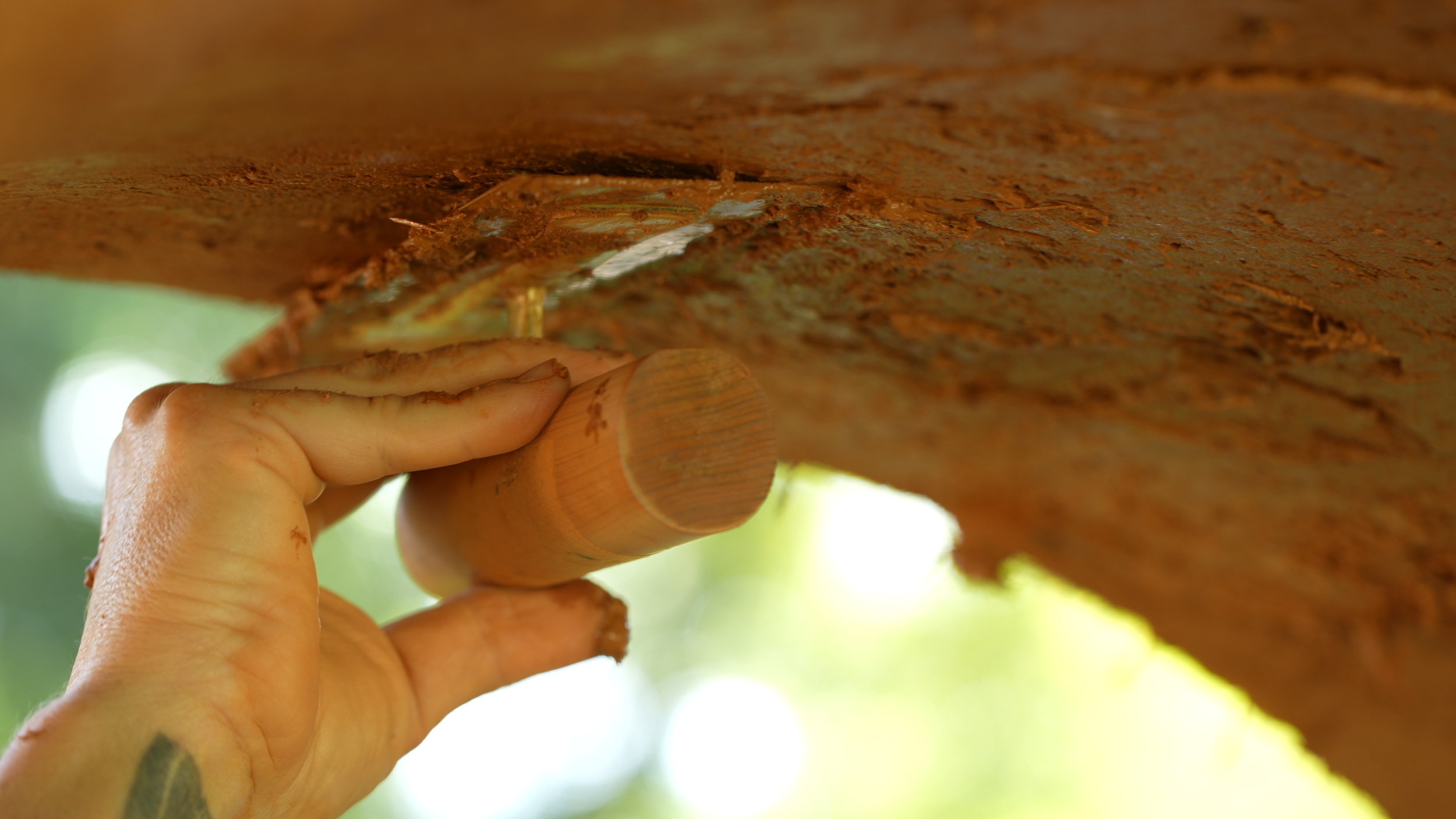
I love my set of trowels. There are certain ones that you get attached to for reasons of function. And then also reasons of: it just feels good in my hands. They're like little friends. When you pick it up, it's an extension of your body and it's a reminder of the things you love to do with your body. I have some tools that were my grandfather’s, and I just love using them because you think about the person you love using them.
When it's time to get to the introductory plaster part of the workshops, I love to tell people: I sucked at this for so long because nobody told me how to do it and nobody told me what tools to use. It’s so fun to be like OK: use this trowel.
It makes such a difference. People pick it up so much faster than I did trying to figure out on my own how to do something in this completely absurd way.
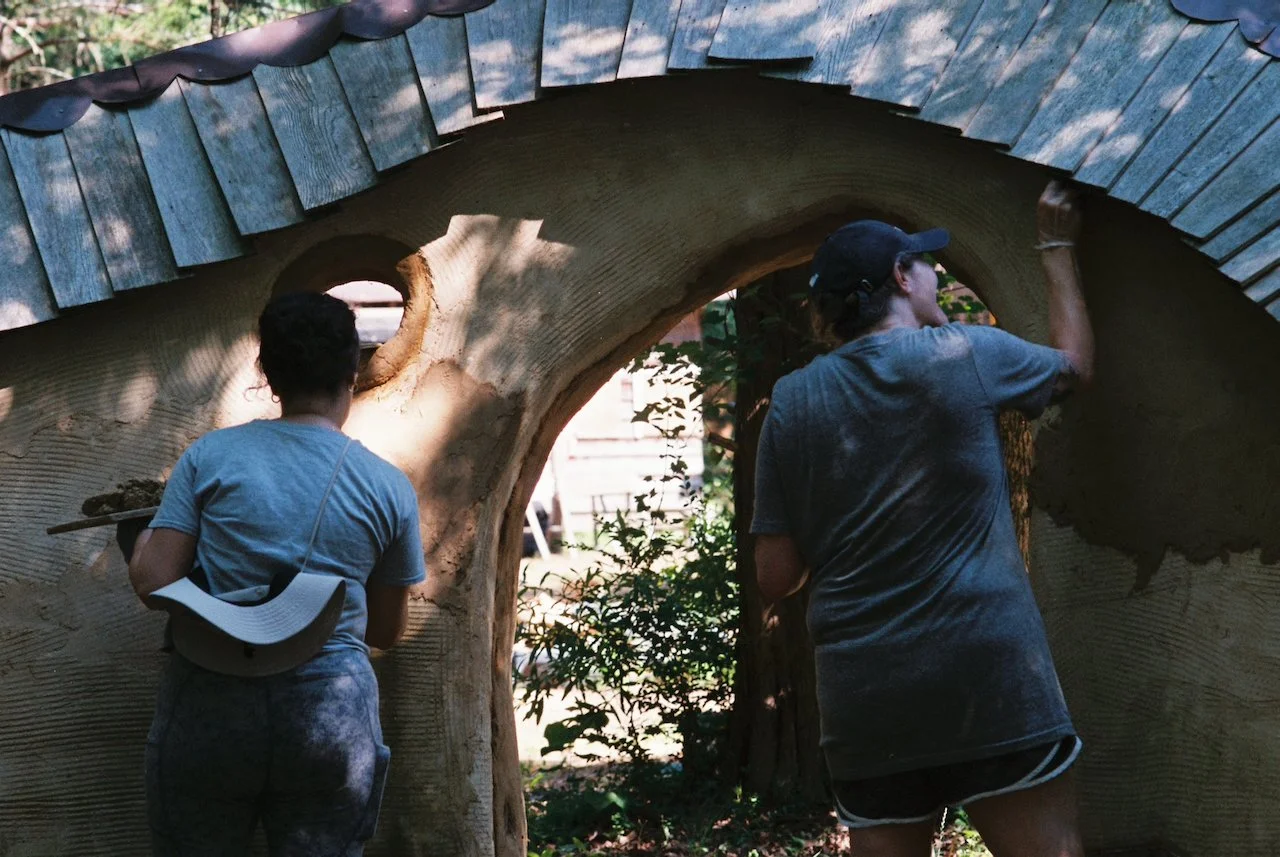
American tools often have unnecessarily large, big fat handles. If I use an American trowel, I go into instant carpal tunnel. And if I use a Japanese trowel, my hand is okay.
My whole life revolves around my hands. They are such a source of joy and satisfaction and also frustration because I always have carpal tunnel and I have all these joint issues.
My grandfather once told me in the town where my family is from there's this Italian-American population and there's this Swedish population. My grandfather was like the Swedish people are good furniture builders and the Italians are really good masons.
When I feel discouraged about my hands, I’m like—No these are good Italian hands. Good for working with the earth. They may be short little Italian fingers, but that's okay. They can do everything.
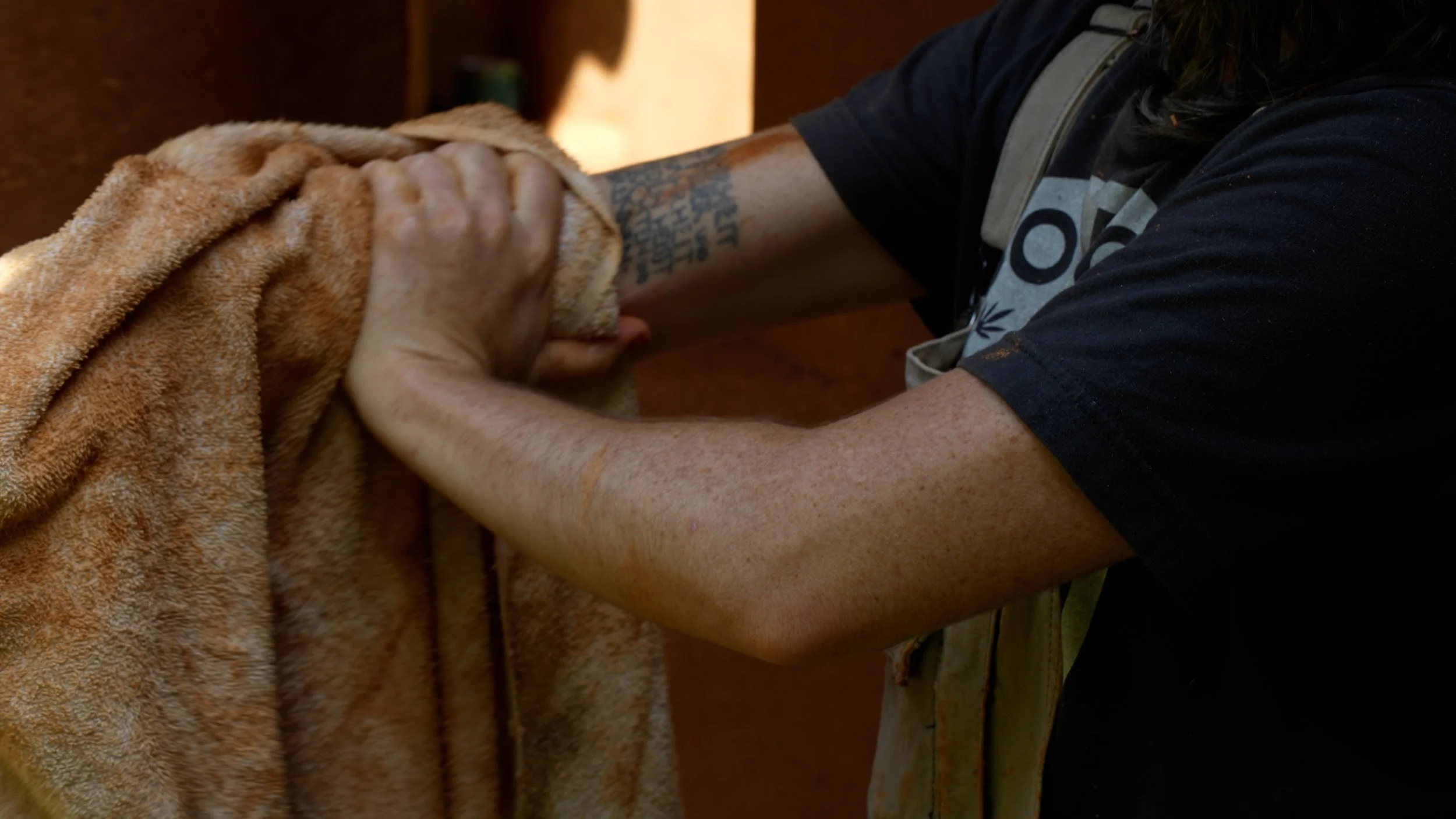
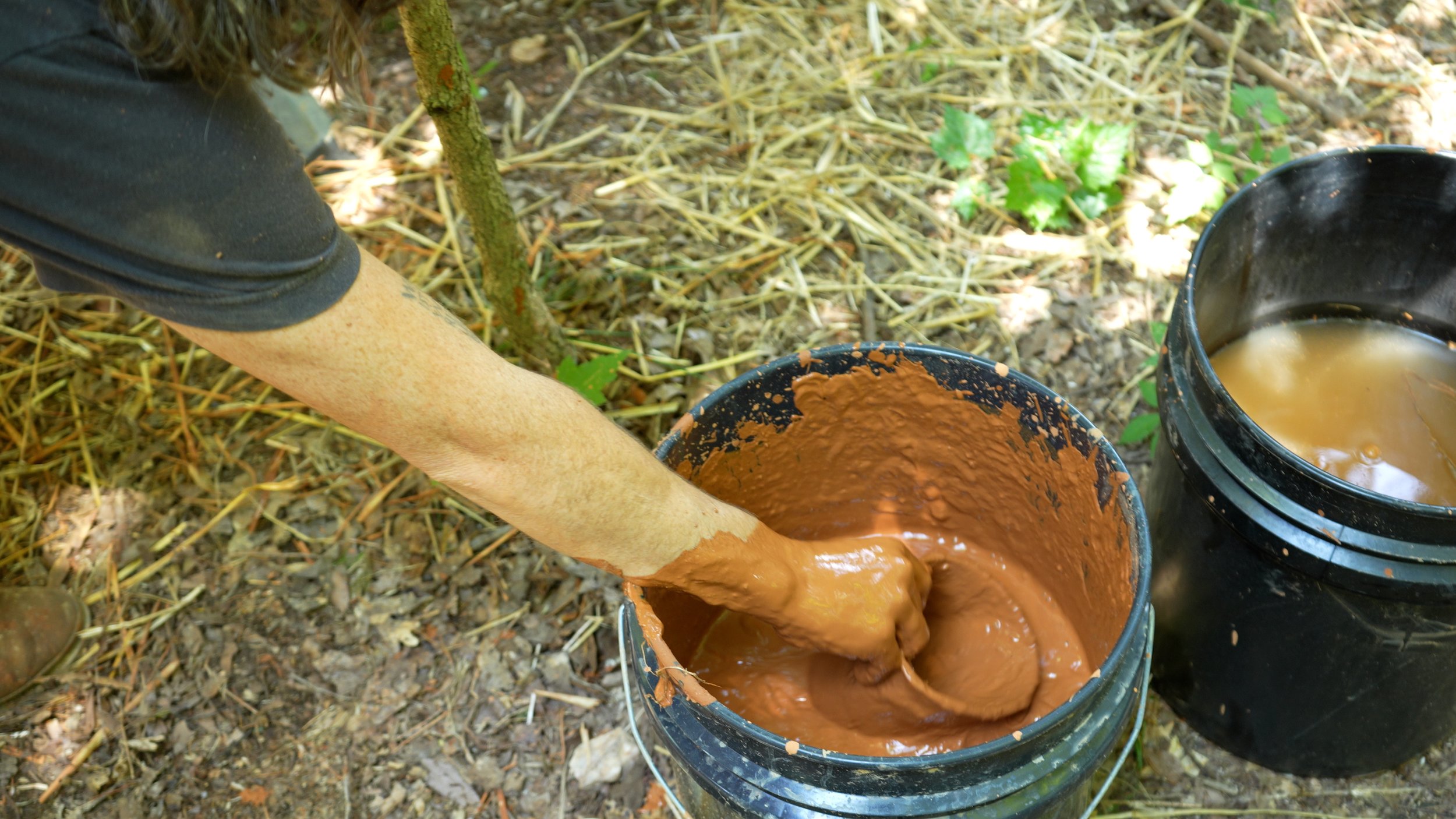
It's these same materials over and over—clay, sand and straw or different fibers. But you can combine them so differently. That is something I could learn about forever and also second nature. I could make a mix and stick my hand in there and feel it and think like, oh it needs another bucket of straw or let’s do two more shovelfulls of clay.
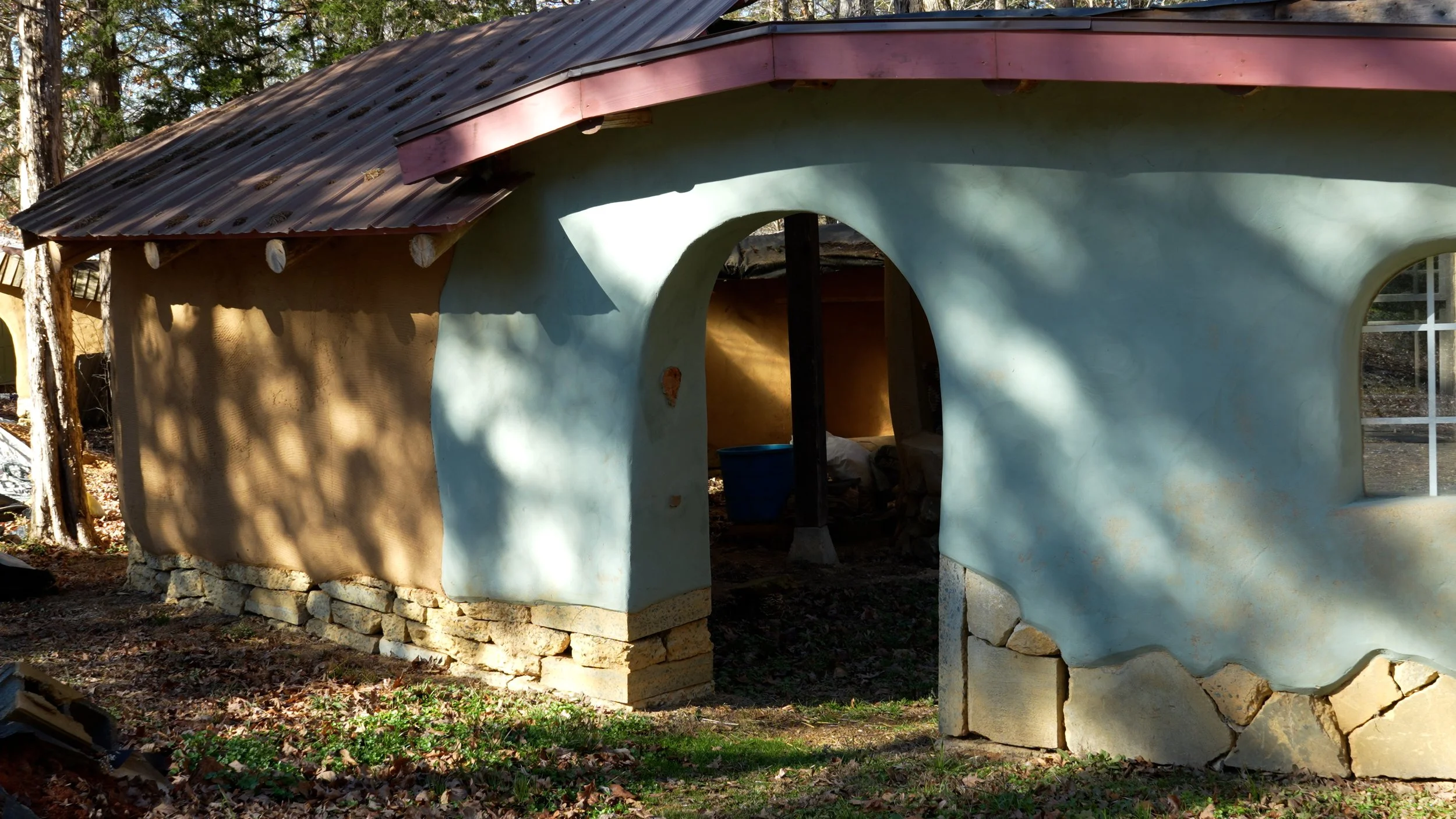
By the second day or third day of a workshop, people will be able to make some mixes and feel them and think—”oh, this one needs more straw.”
I love to be like—Just wait. In a couple of hours, suddenly it clicks.
Part of that is learning how to work with your hands; it’s a muscle memory feedback loop with your own hands.
So much of this is just getting the chance to do it.
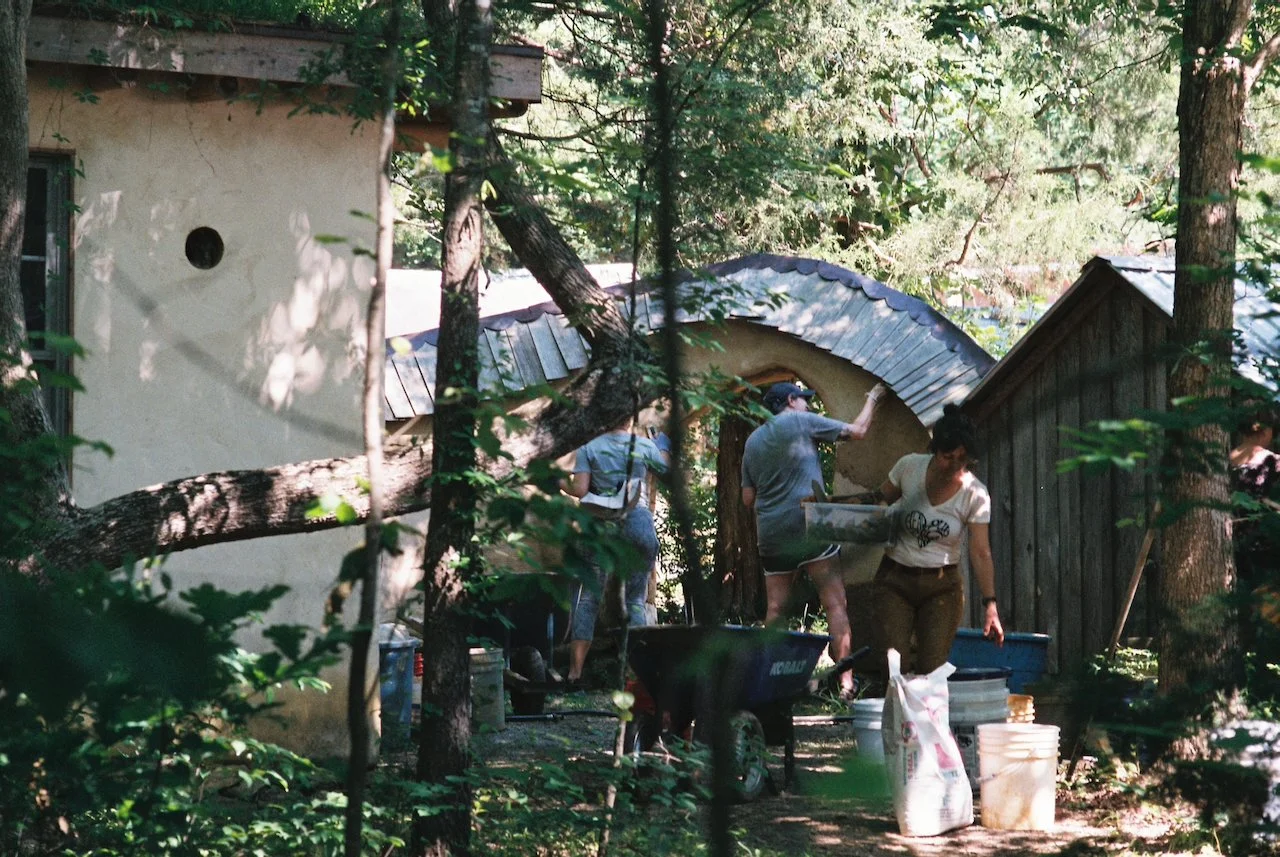
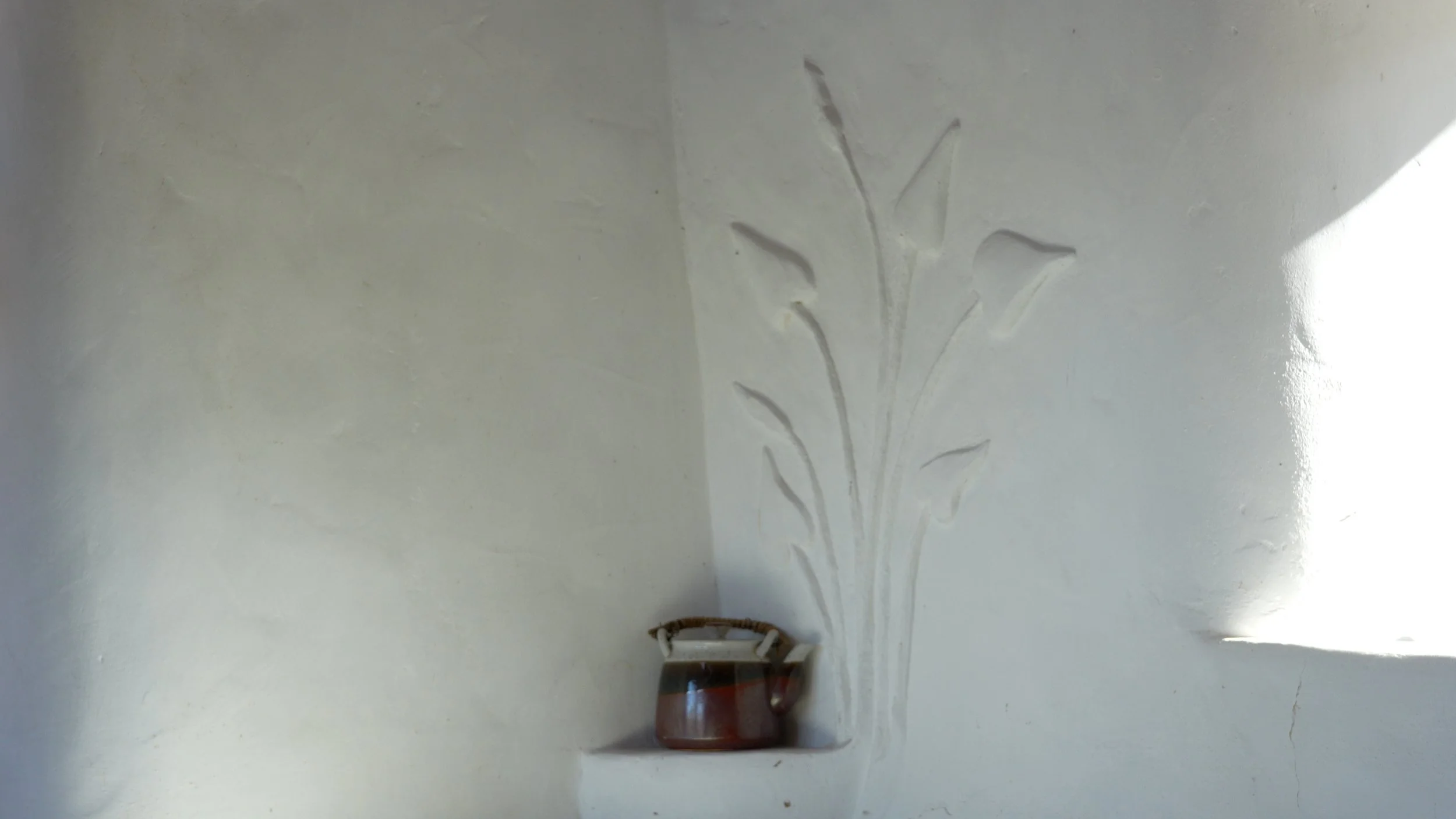
My happy place is somehow related to being in the mud.
You would never know until you get a chance to be knee-deep in mud that that's your happy place.
We're lucky sometimes to have the experience that turns on that feeling.
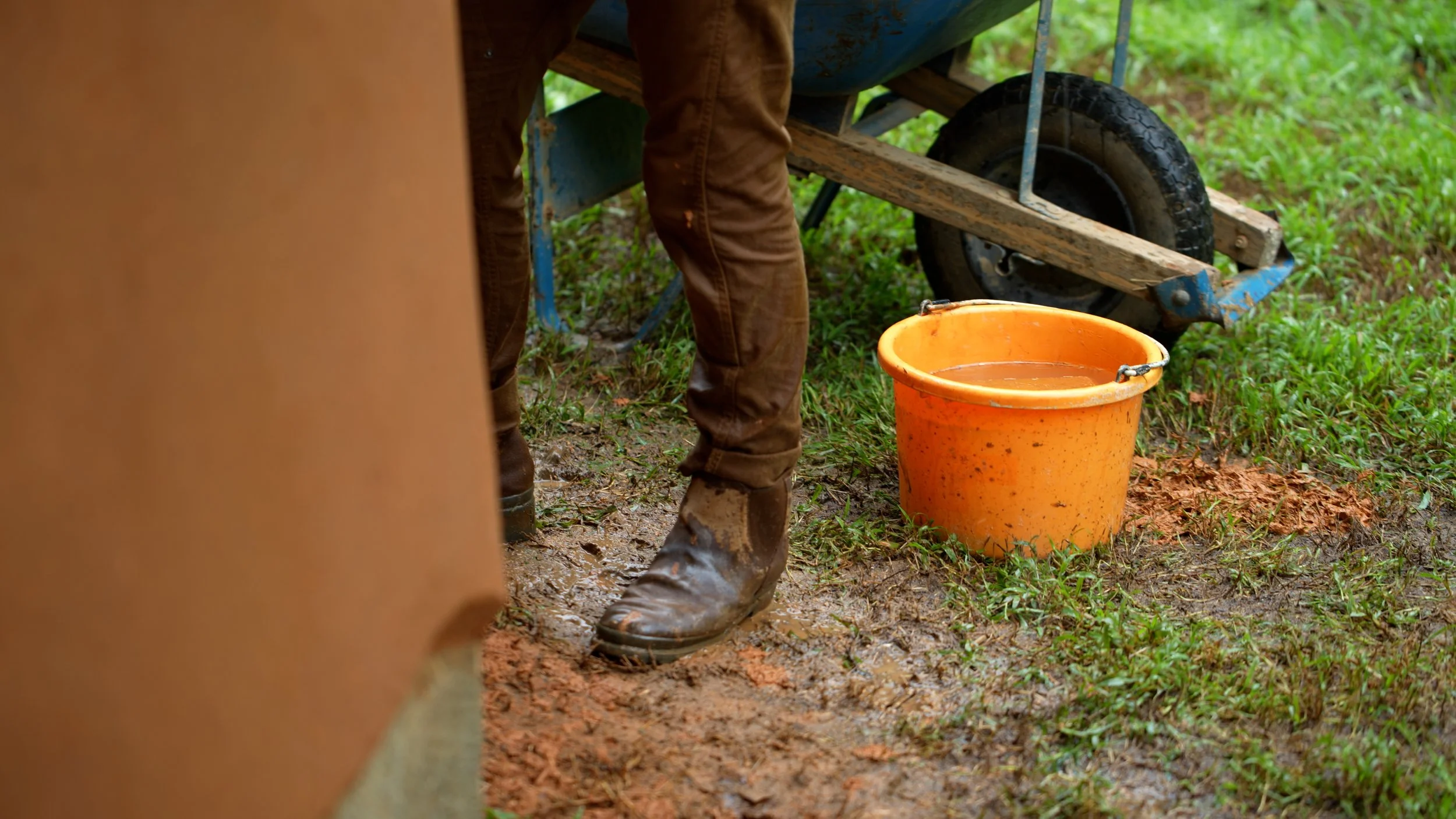
When I was finally building my house, I was like, I actually love digging. I feel so good now that I’ve been digging with a mattock all day.
People crave working with their hands. We work so hard to avoid it, and we have this part of our lives that’s missing.
And then we find it. I love pushing myself a little physically. Like, how full can I get my wheelbarrow and how far can I push it uphill?
The physical world
is endlessly fascinating and mysterious
When I’m digging here, my mattock goes through the clay in a different way. And why is this site free of quartz, and then when I dig fifteen feet away, it’s completely different?
It’s all this huge mystery, and if you pay attention, my mind is entertained all day.
When I’m working on a work site, I’m always thinking about—What if I do this? How will the process go differently? That feeds my interest of what on the outside appears to be really boring physical labor. I’m mentally doing minor experiments all day long and improving my efficiency.
It’s fun for me—that’s the nerdy side of what I do.
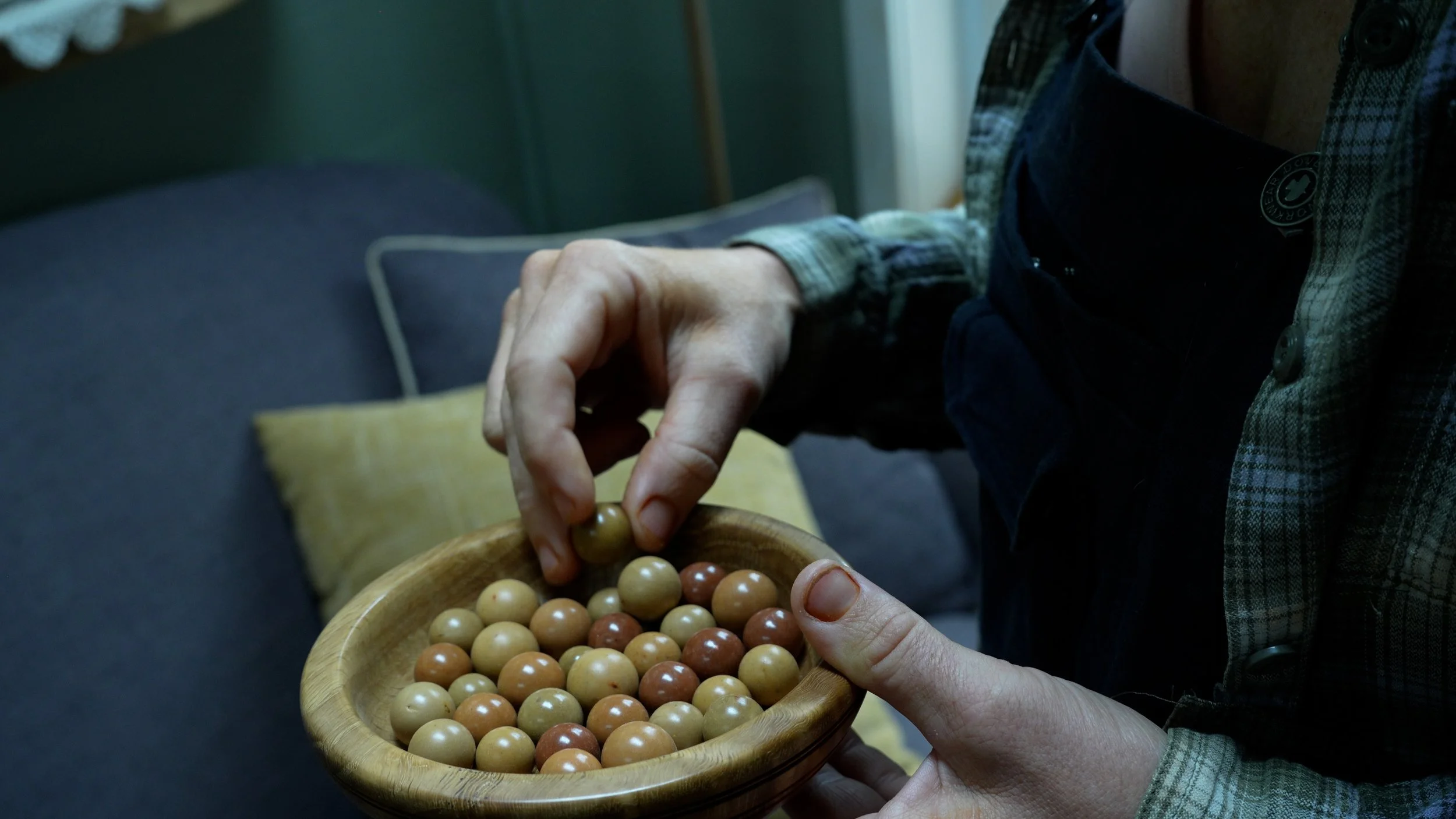
These are some of my “dorodangos”
This is the clay that's out there in the pile that I was just putting on the wall.
As it's drying, I just polish it.
The clay particles are platelets, and as they're drying and you’re polishing them, all the platelets start aligning and they become reflective.
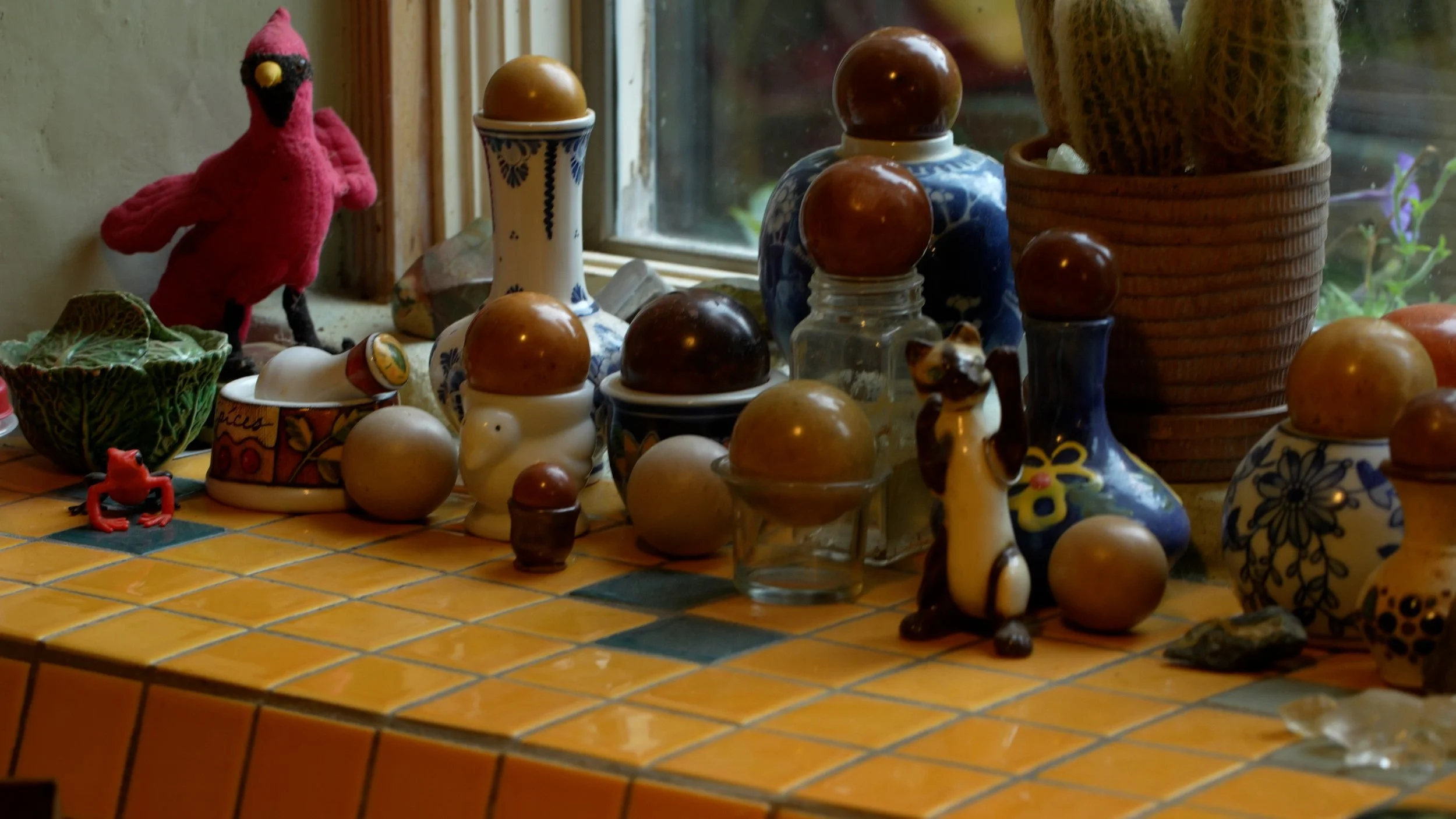
I didn't think they would be fun to make; it sounded boring—polishing a lump of clay forever.
But then I realized you could learn so much about your soil.
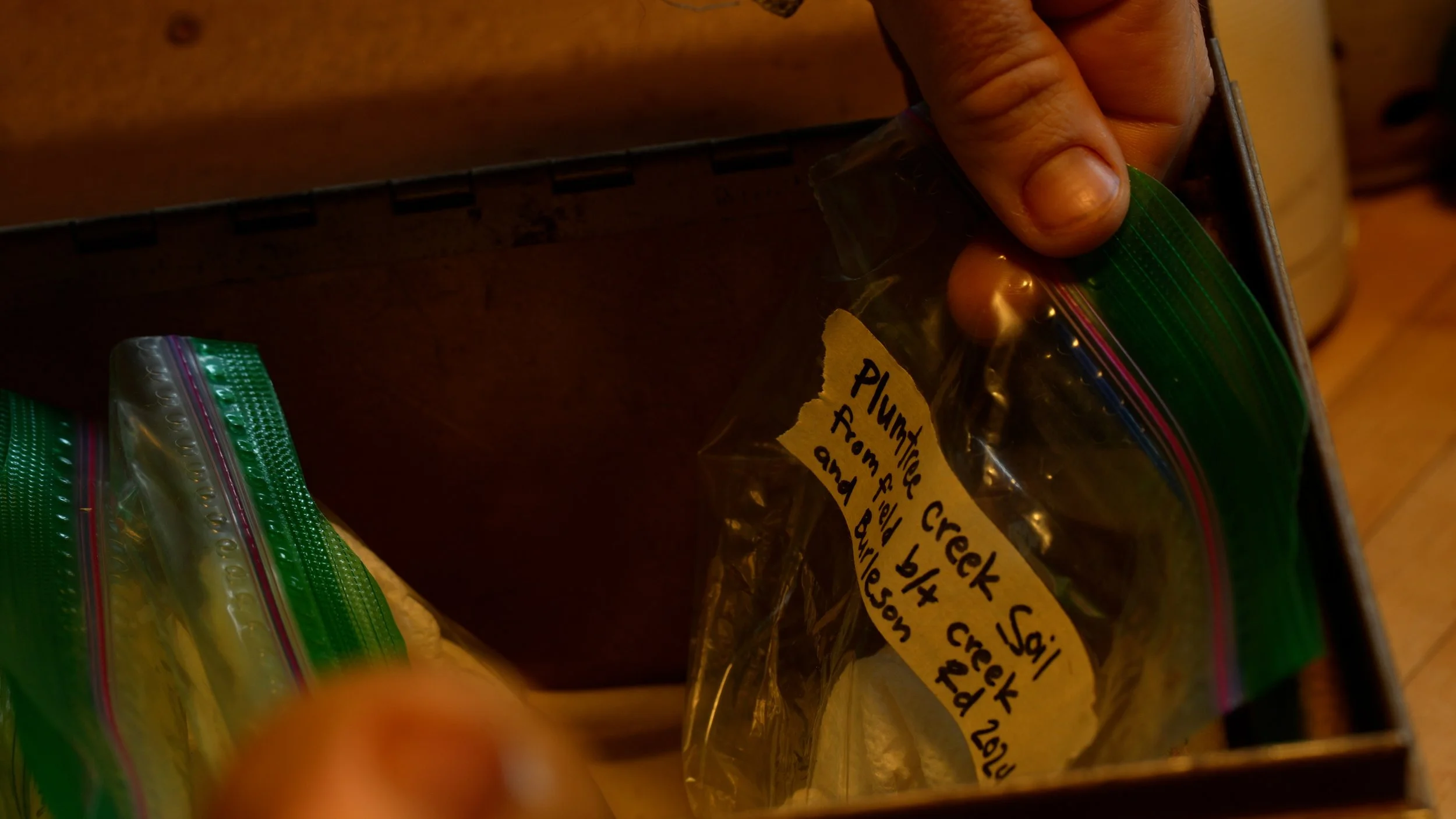
This is from when we were on a walk in the woods after it had rained. There was a washed out ant hill, and it was so pretty.
This was when we were hiking the Blue Ridge Parkway and we stopped on the side of the trail. There was an overturned tree–the roots and soil were exposed.
It’s pretty because the soil out there has so much mica in it.
Now I know where to get different soils.
There's a really orange spot by the pond. As you move through one field the soil gets more gritty and as you move up towards the road, it has more aggregate in it. Then you keep going a little further and that part of the land has tons of quartz. It's fascinating.
I'm determined to take geology classes because it drives me insane that I don't know why.
I don’t like
mixing slip straw. I don't know why, but I find it endlessly boring. Even though I love getting muddy, I don't like mixing it and having little bits of mud flinging at me.
When you start trying to invent a whole new system—like, how can I mechanize this? How can I do this differently? There's got to be a better way—then I have to remind myself: maybe this is the best way and I just don't like it.
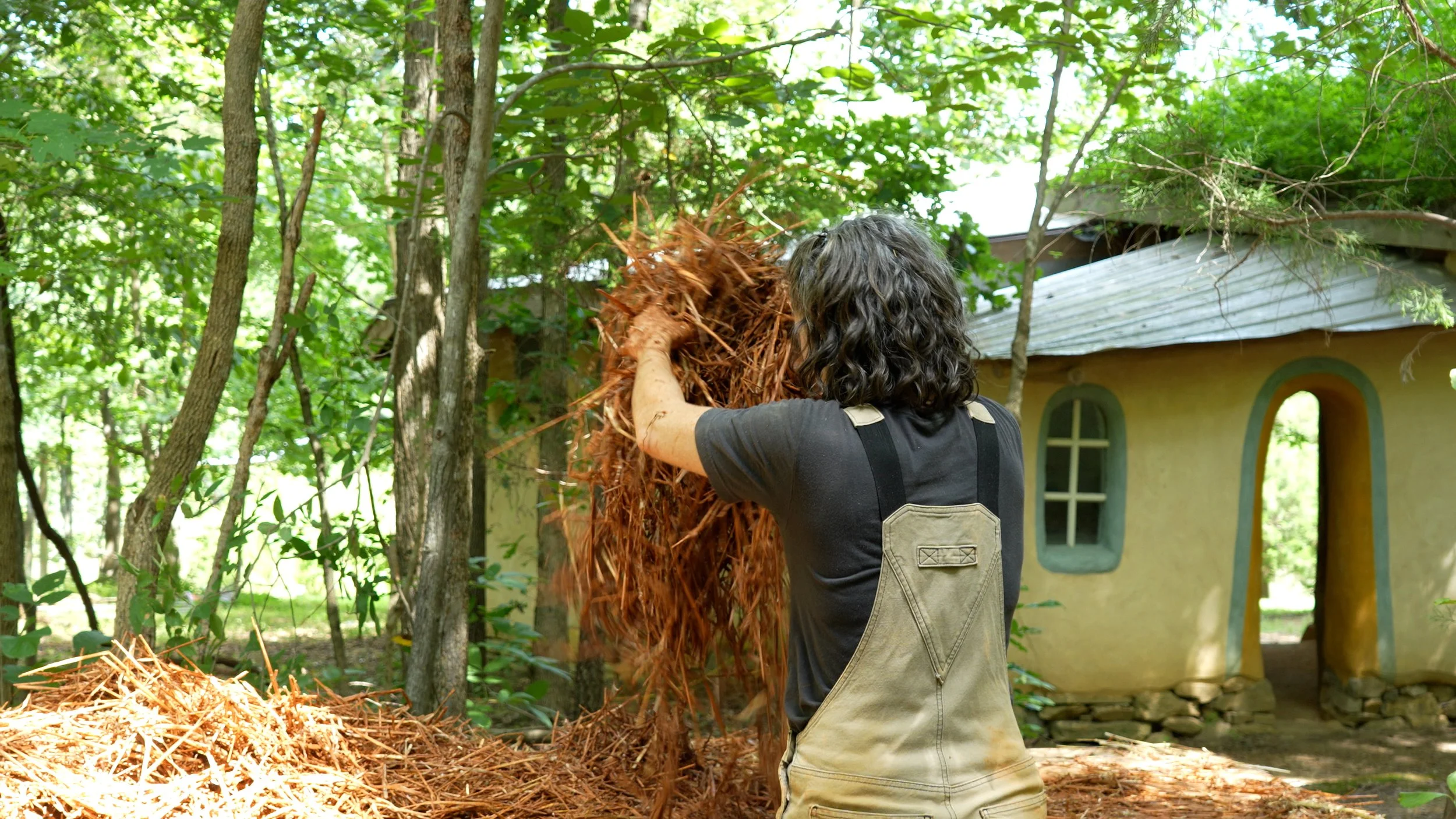
I would choose straw bale over a slip straw because I like re-tying bales and I like notching bales, and I like compressing the bales. I find it so interesting; it's like woodworking—like a big version of joinery.
I have to have enough problem solving that I feel mentally challenged all the time.
The other side of that is these moments where you've gotten yourself in a little too deep.
But then you force yourself to learn and then that feels so good.
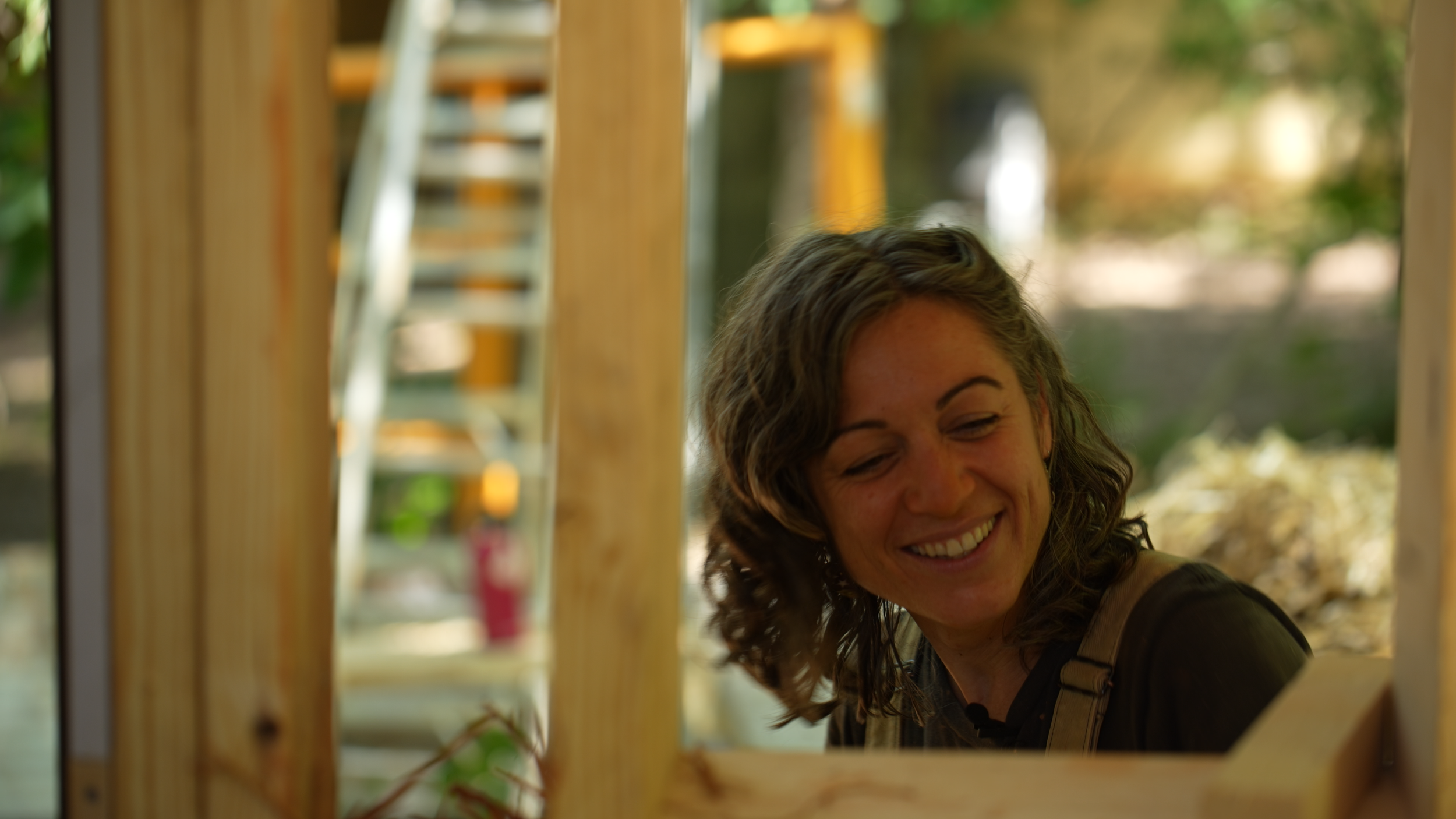
My commitment to being a good teacher is a commitment to always learning.
As long as I'm having people come here and sharing what I know, I'm determined to always be learning more because then I have more to share.