Nikki Puckett Bosov,
Auto Mechanic
I got into mechanics
at a young age. I took a class in high school with my best friend. It was fun—hands on.
I always took apart the VHS and DVD players and put them back together. That guided my way because I knew I was good at taking things apart and putting them back together.
It felt great
to be like, Wow, this is not that scary. The teacher was encouraging of everyone to be more independent and get our hands dirty.
I did
special ed for twelve years, and on the side, I worked on cars.
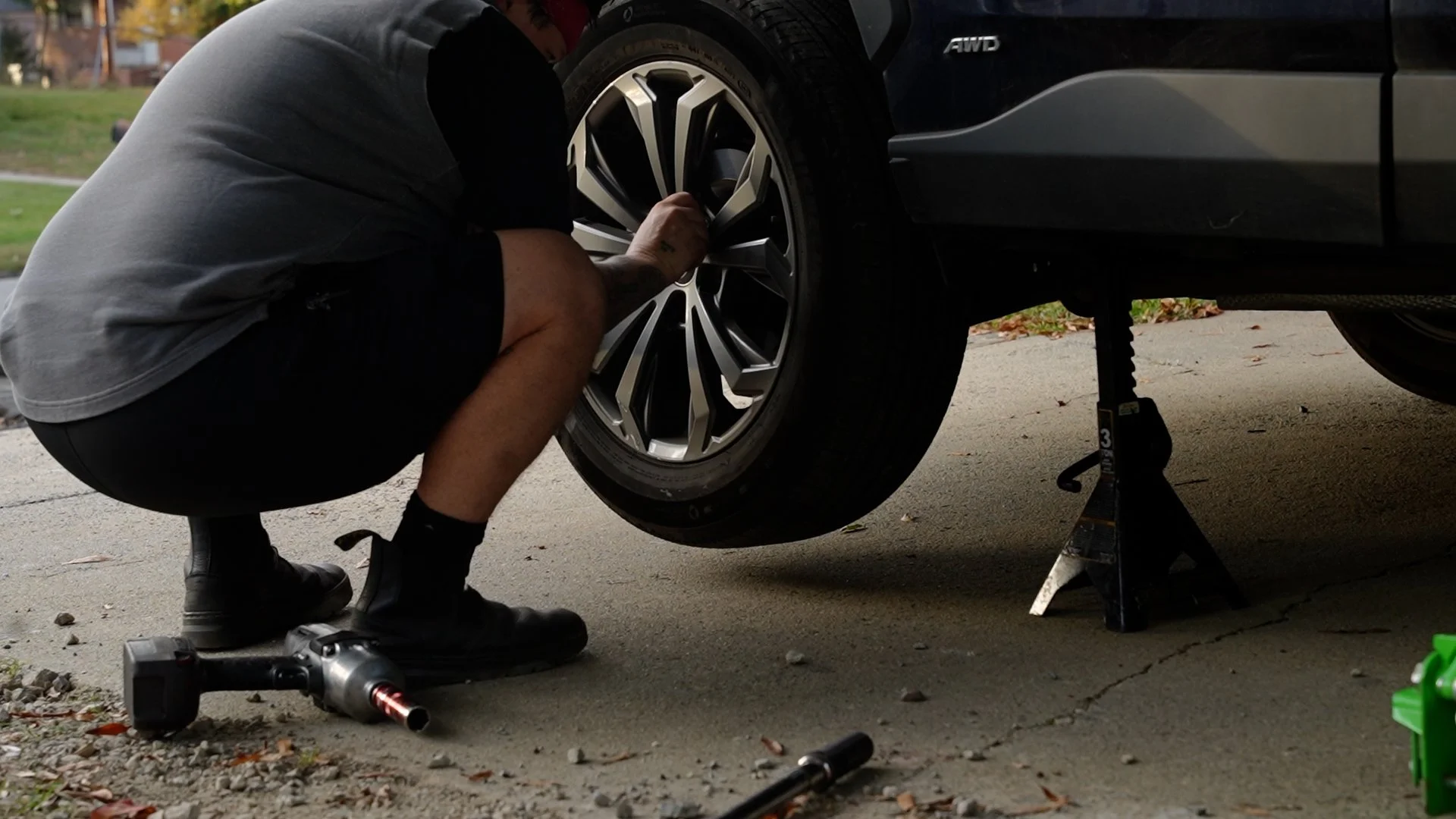
And then something
happened. I didn’t know much about cars then other than how to change the oil and the tires. And I was forced to buy these breaks. I was like, “This car is brand new; it doesn’t need brakes.” After that I decided I will never let that happen again. I will never let someone screw me over.
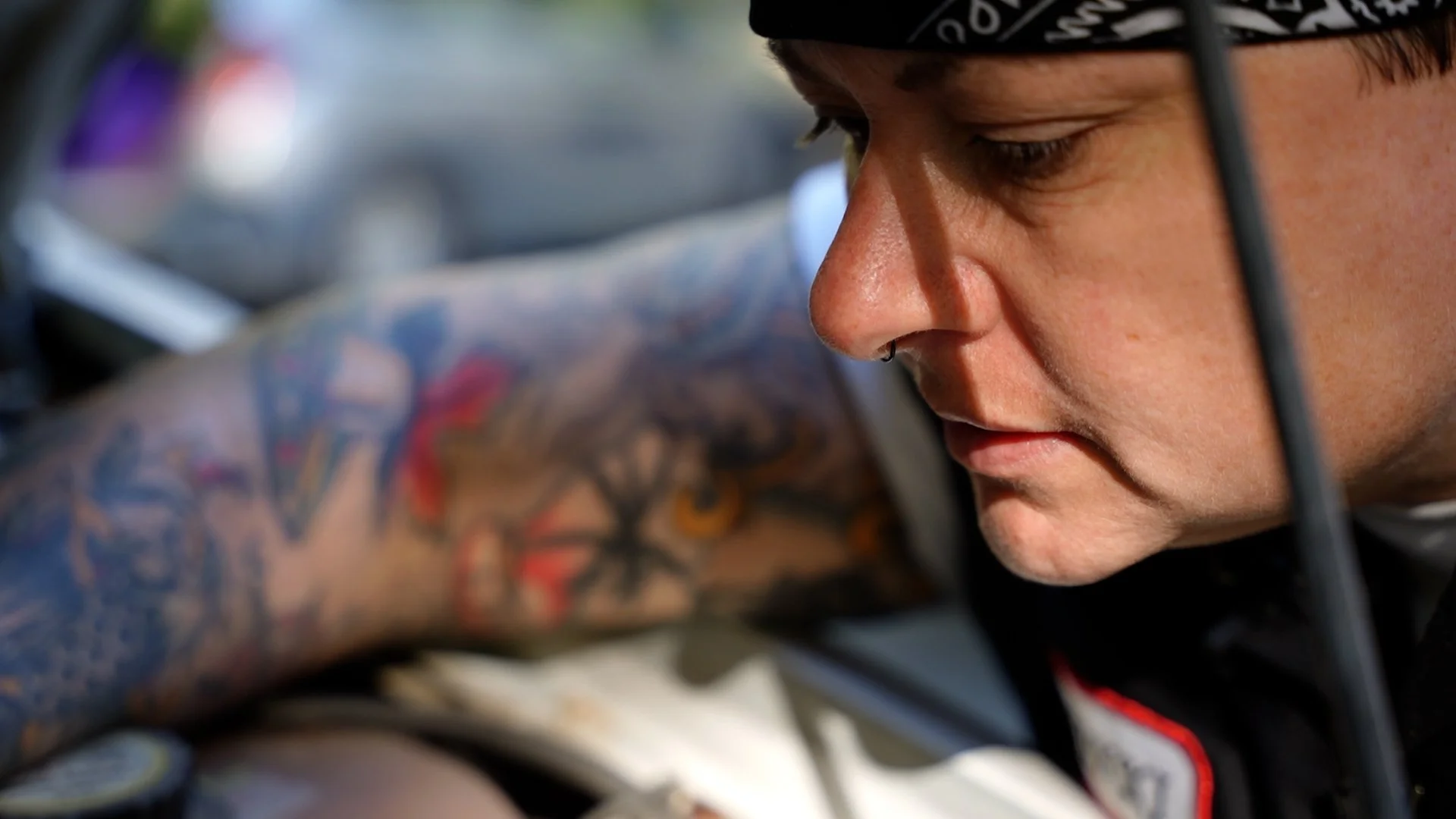
And so I
started at the bottom working at Valvoline
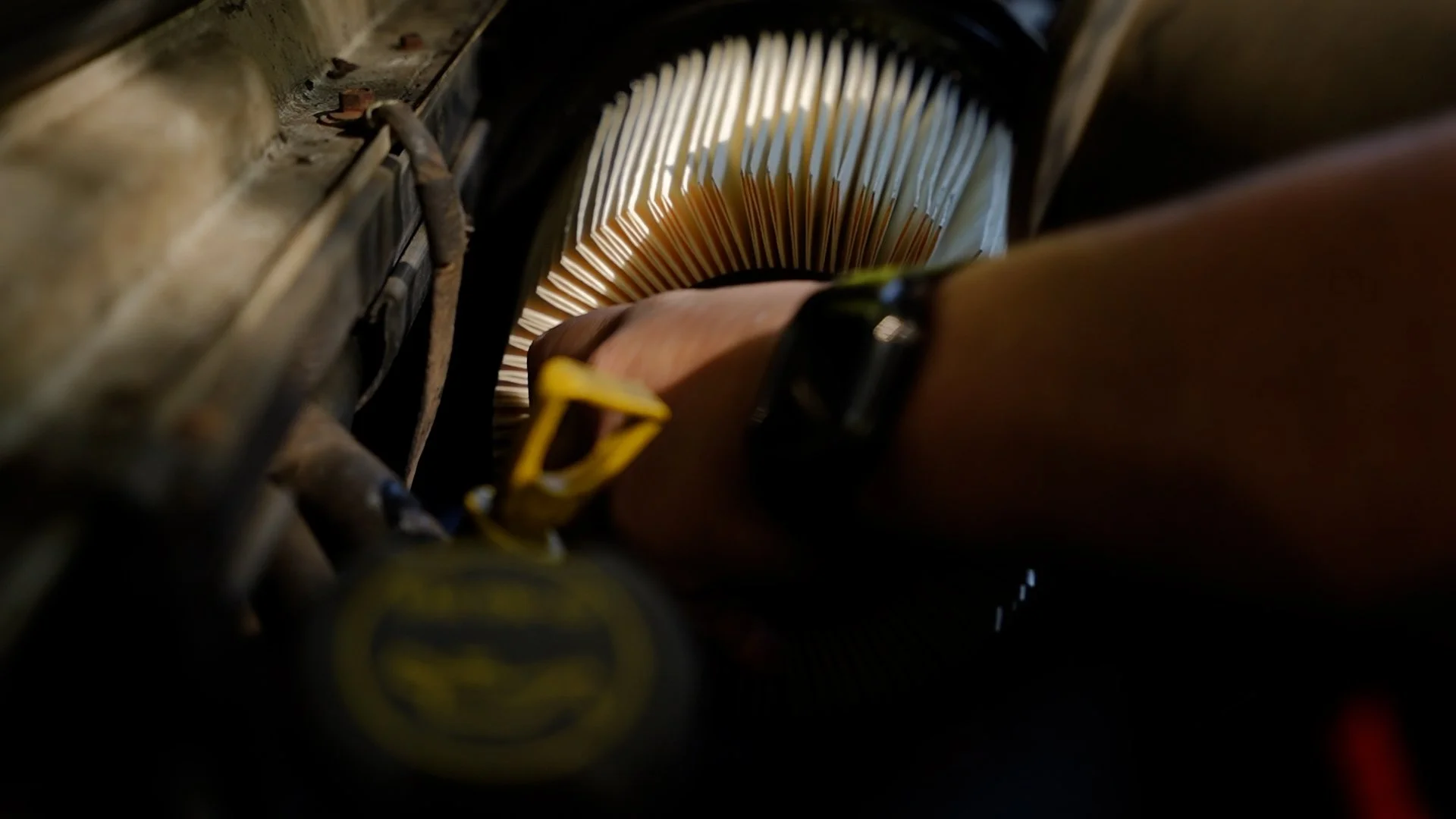
I just wanted to learn
how to get under a car and what things were. I wanted to know where certain filters were that could save you $50 to $100 changing a filter yourself. I was like—why is this such a secret? Why aren’t we told this?
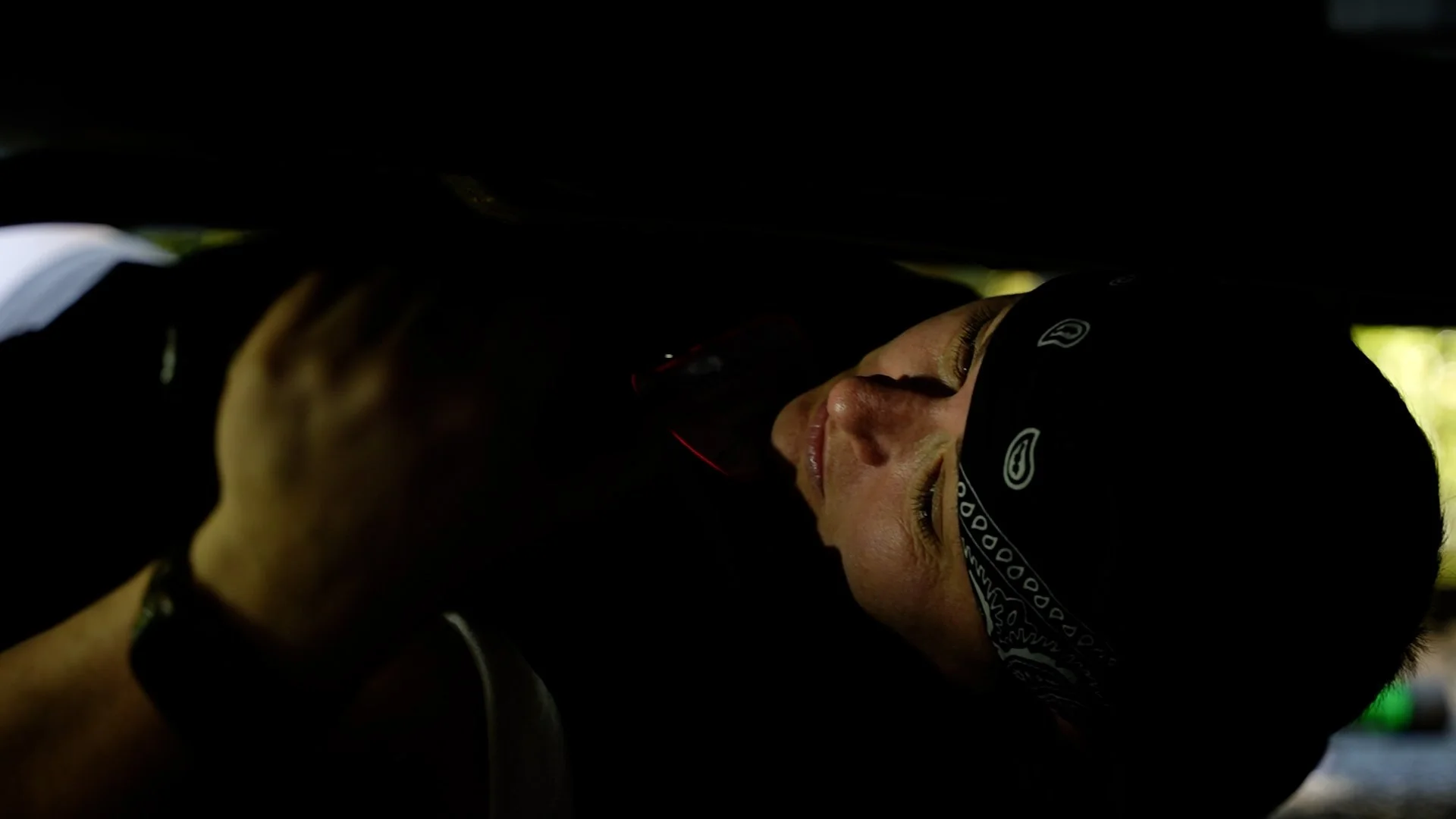
So I
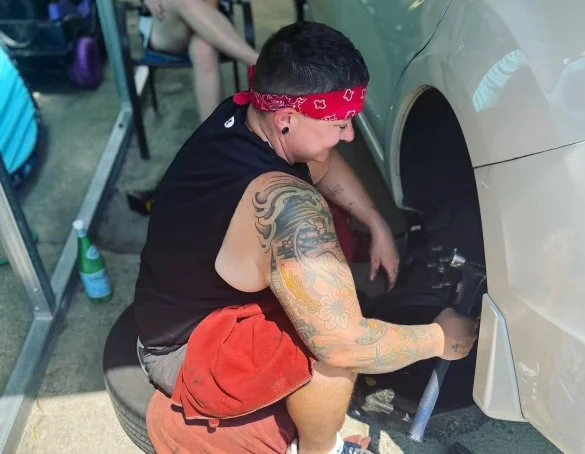
moved to North Carolina and started doing it full-time professionally.
I started working
at AAA as a Lube Tech. AAA gave me my head start to moving up the ladder quickly.
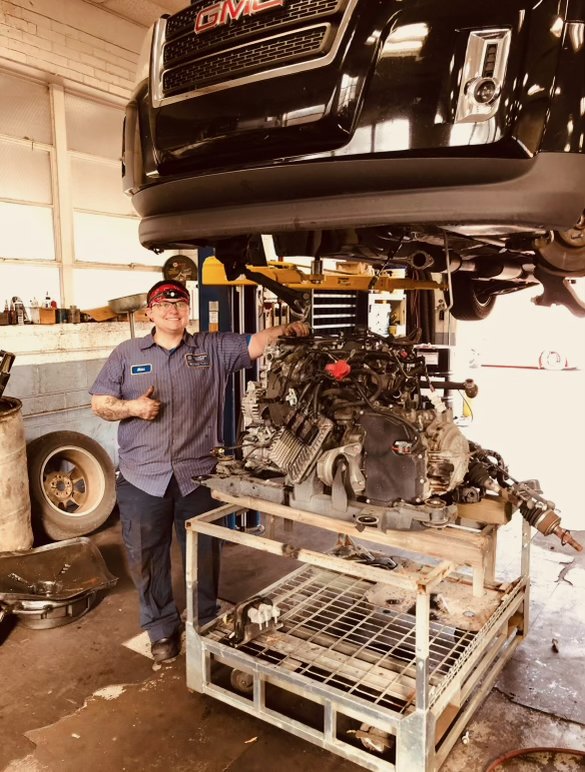
I ended up
working in front of the window where all the customers could watch you. We called it the fishbowl. I would have three or four cars I was working on at once to get the customers out. I went from a Lube Tech to a B Tech, which was the next step up.
There was a lot of good and bad in working for a corporation. I had a large following, but I ended up leaving to go to a smaller mom and pop shop after a couple of years because it was just too much—there was a lot of bullying and sexual harassment.
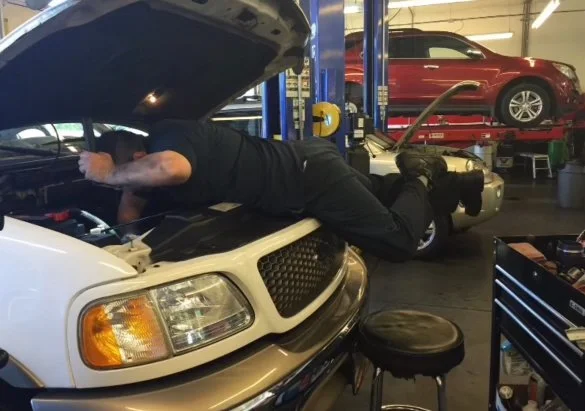
When I went to the small shop,
I was the lead tech there.
Massengills was right downtown. It was amazing—it was an air conditioned shop. In the summertime, it was nice to be working on a hot car and have some air flowing on you. [The owner] let me do my thing but also encouraged me and helped me learn quicker ways to do things. He was very patient.
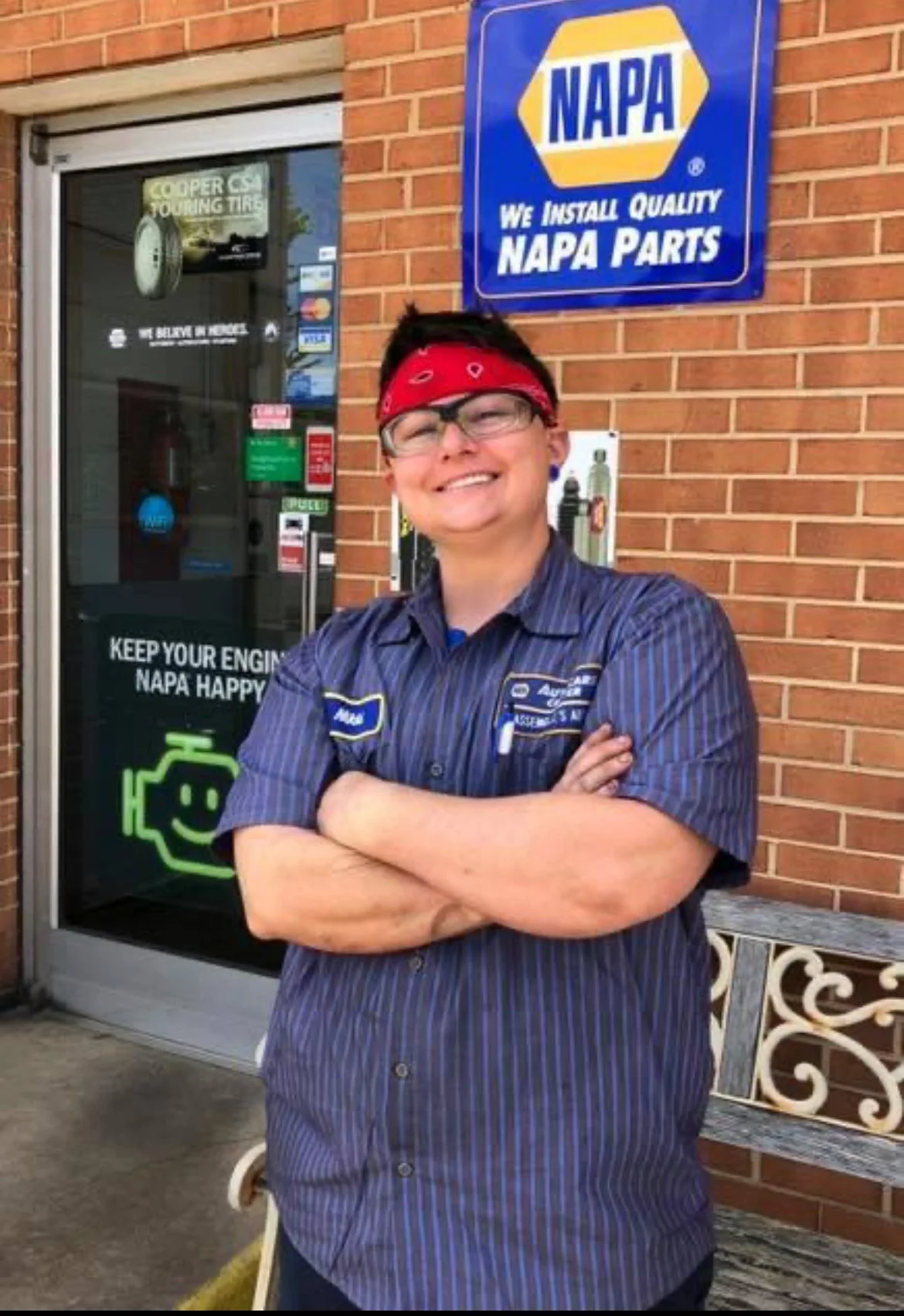
He gave me
the freedom to bring customers back and show them their cars and not hide anything from them. It made me feel better that there are other people in this world who don’t want to screw people over and never want to overcharge people.
I knew that after he closed down during the pandemic that I would never have that again—never have the peace of mind that I wouldn’t be touched while I’m working on a car or be yelled at or belittled.
I wanted
to work with people that also wanted to work on cars. Not just like—this is a job, but to do it for the customers.
I talked about this
for a couple of years, saying—I see so many cars broken down on the side of the road. I want a shop where you don’t feel taken advantage of, talked down to, or scare tacticted into buying stuff. I want classes at night where we can educate the public on basic car maintenance and what you can save and the basic safety stuff you should have in your vehicle.
I met Bear
years ago. We both said at the time that it could be really cool to work together sometime. I’ve never worked with another female or nonbinary person before.
I reached out and was like, “Hey, I’m thinking of starting my own business.”
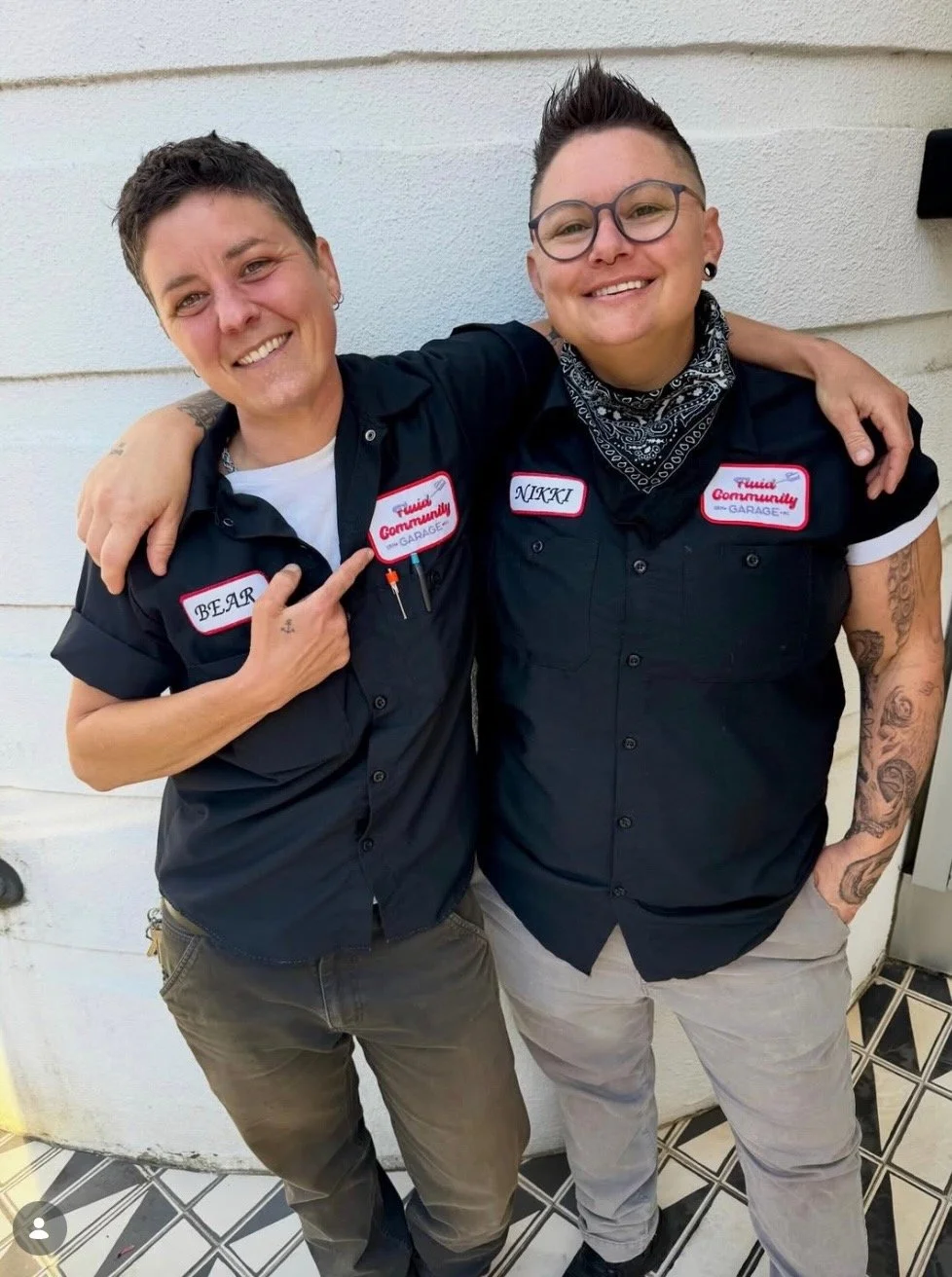
I said, “What if we got more people involved and did something a little bigger?”
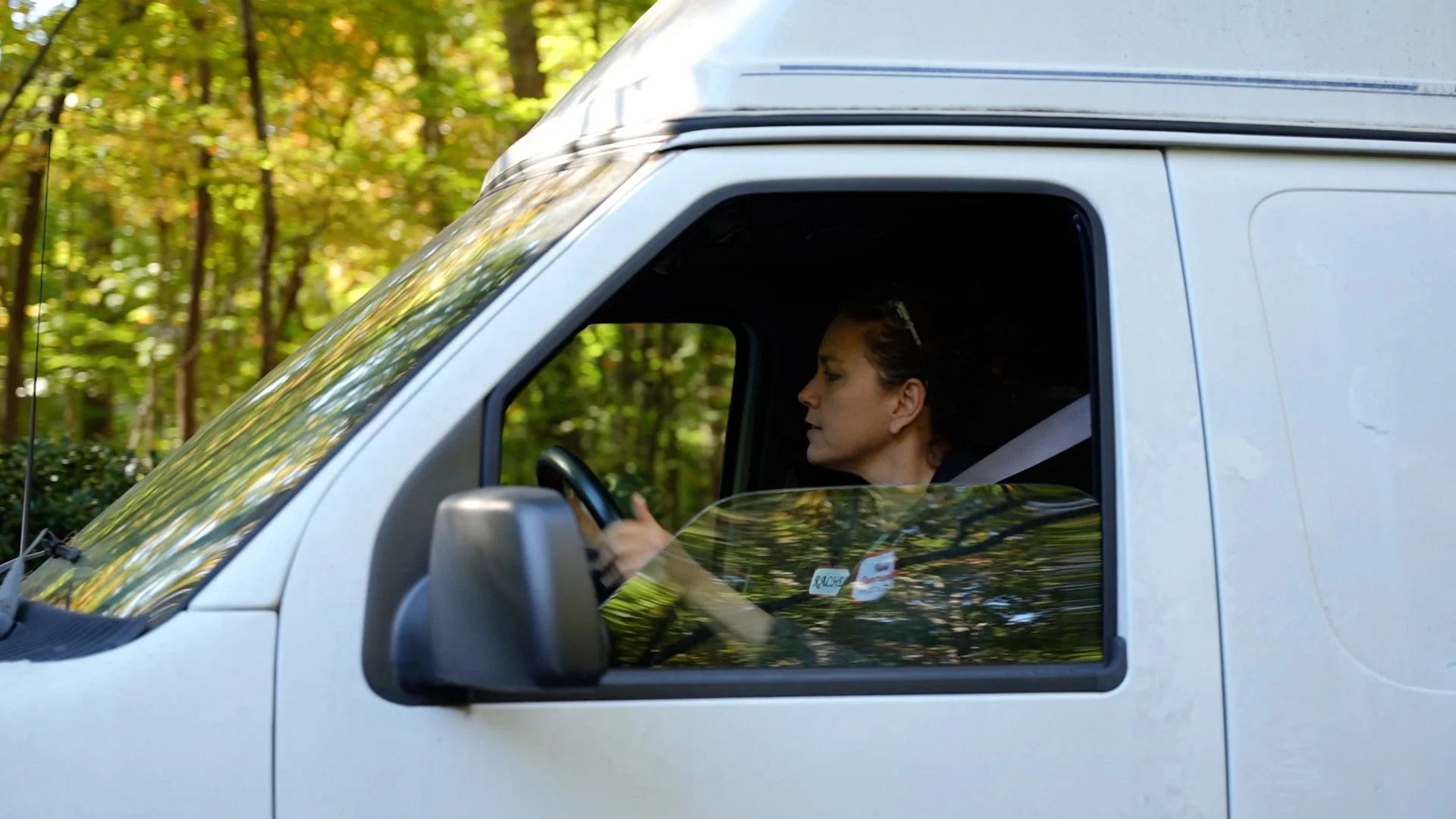
I met Rachel
in a women/nonbinary trades group meeting.
She was one of the first people I spoke to
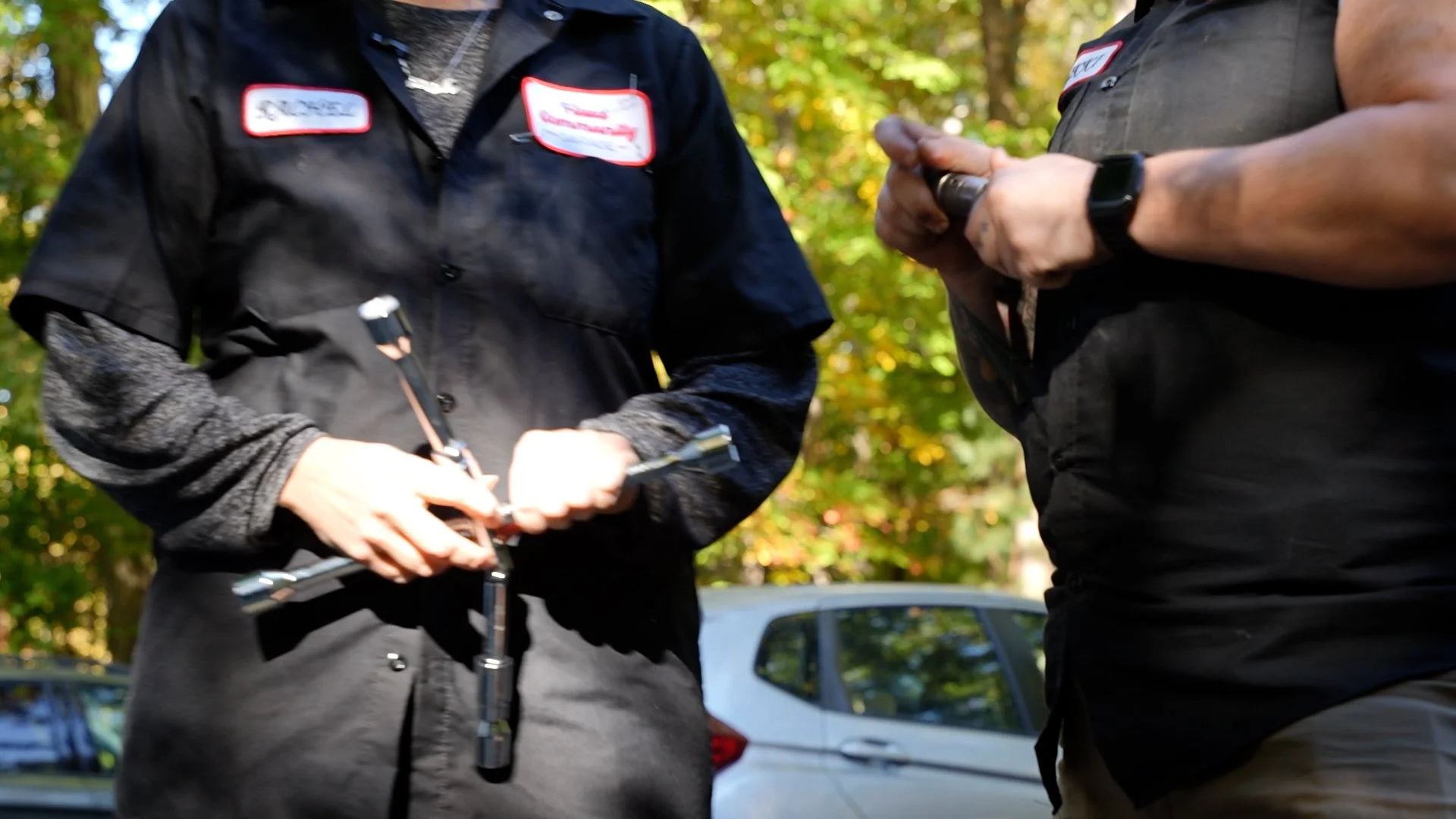
and she was like, “I’ve had that idea! I used to work on diesel vehicles. I’m interested. I want to do this.” They were the light to our fire. They were like, “Come on, I can write grants. I can do this.” They really pushed us to get patches and do the classes. It went so fast.
we started looking at places together and opened a bank account. We have the same passion to educate people and help people save money.
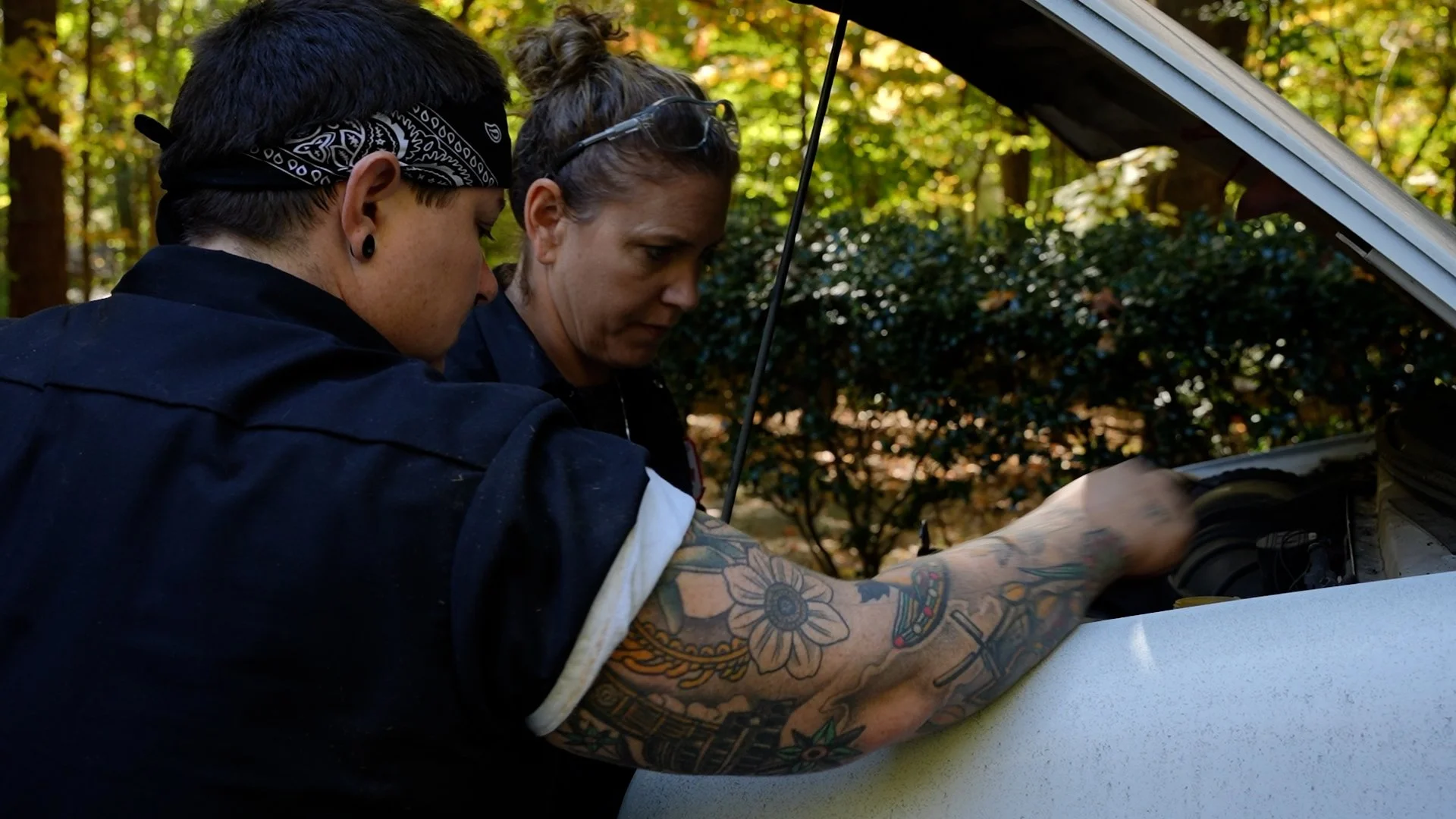
So we have a bit of everything we want for the shop.
It’s going to be Fluid Community Garage.
Bear can keep doing what they’re doing. Rachel and I will do more of the education part.
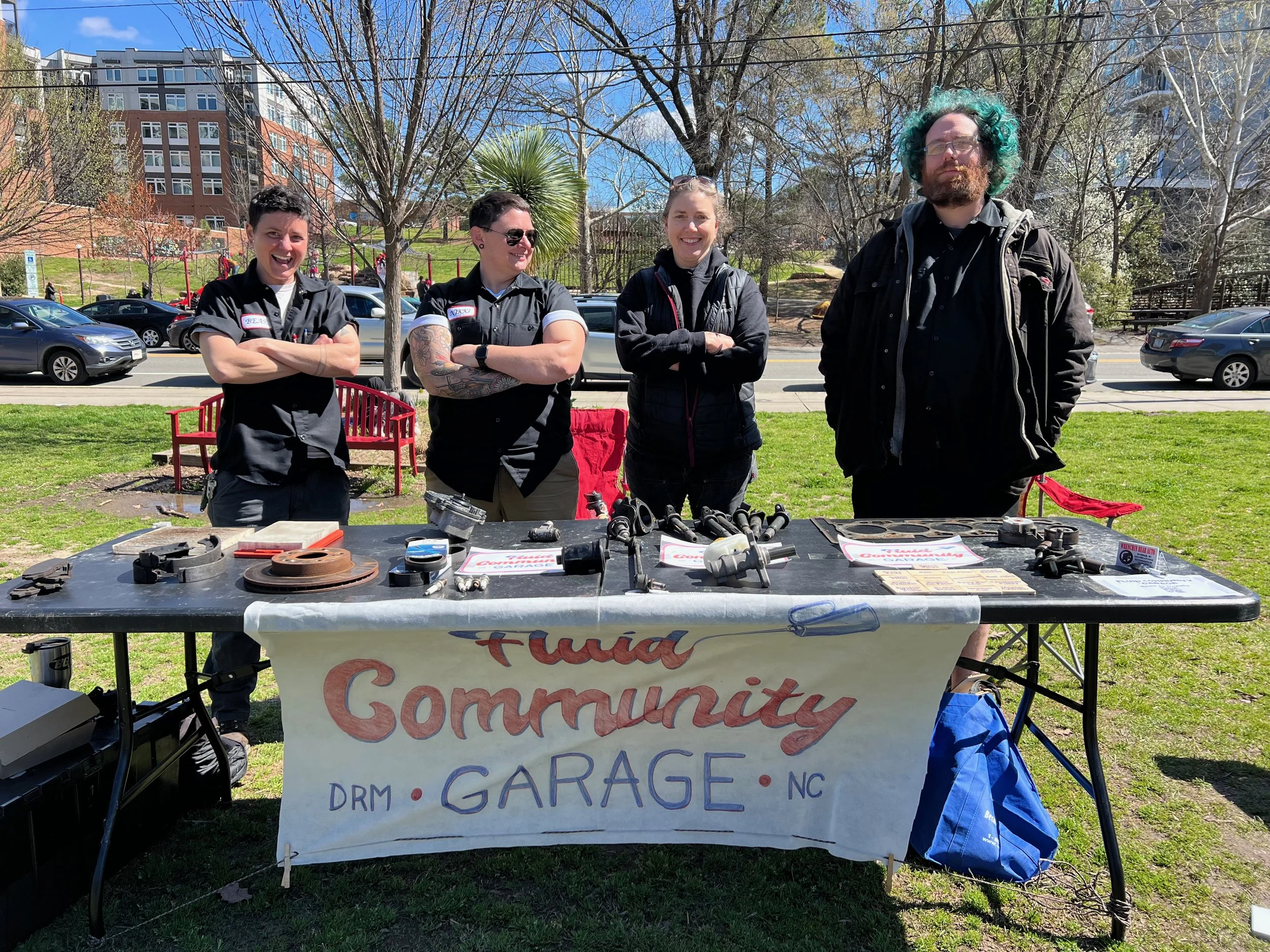
We started
doing classes at Night School Bar [in Durham]. It was amazing. I’m a hands-on learner, so a lot of our classes were hands-on. We asked the local auto parts stores to donate stuff that we could give away as prizes. Students could go home with a wrench set or some type of tool. Rachel talked about the safety of our vehicles and the stuff we should carry.
We had different car parts on the table. I let everyone come up and touch them. And then the next class, we made a game out of it. They had to match up the names with the parts.
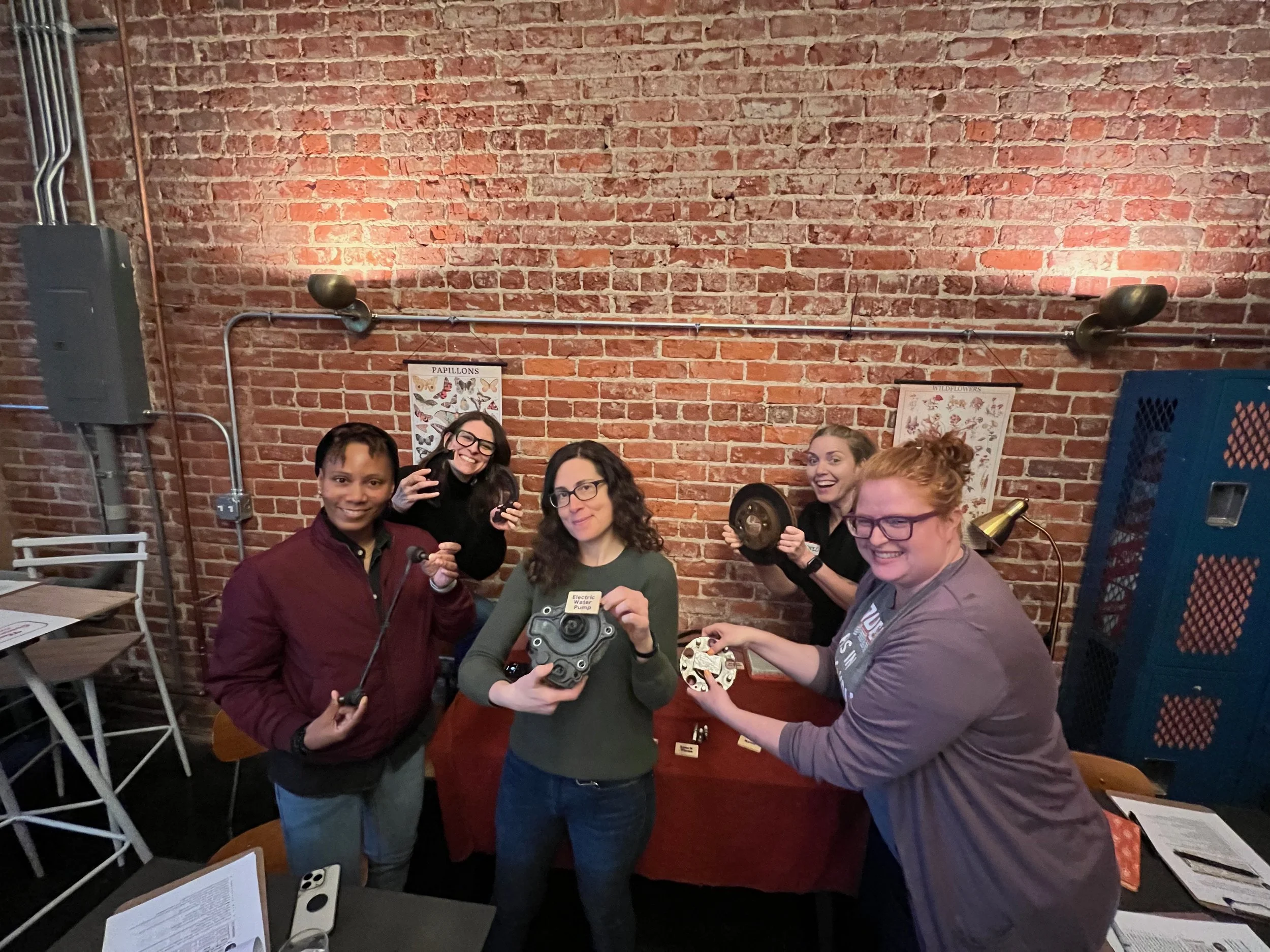
It was really fun
to see everyone interact and hold up stuff—hold up a caliper or a water pump.
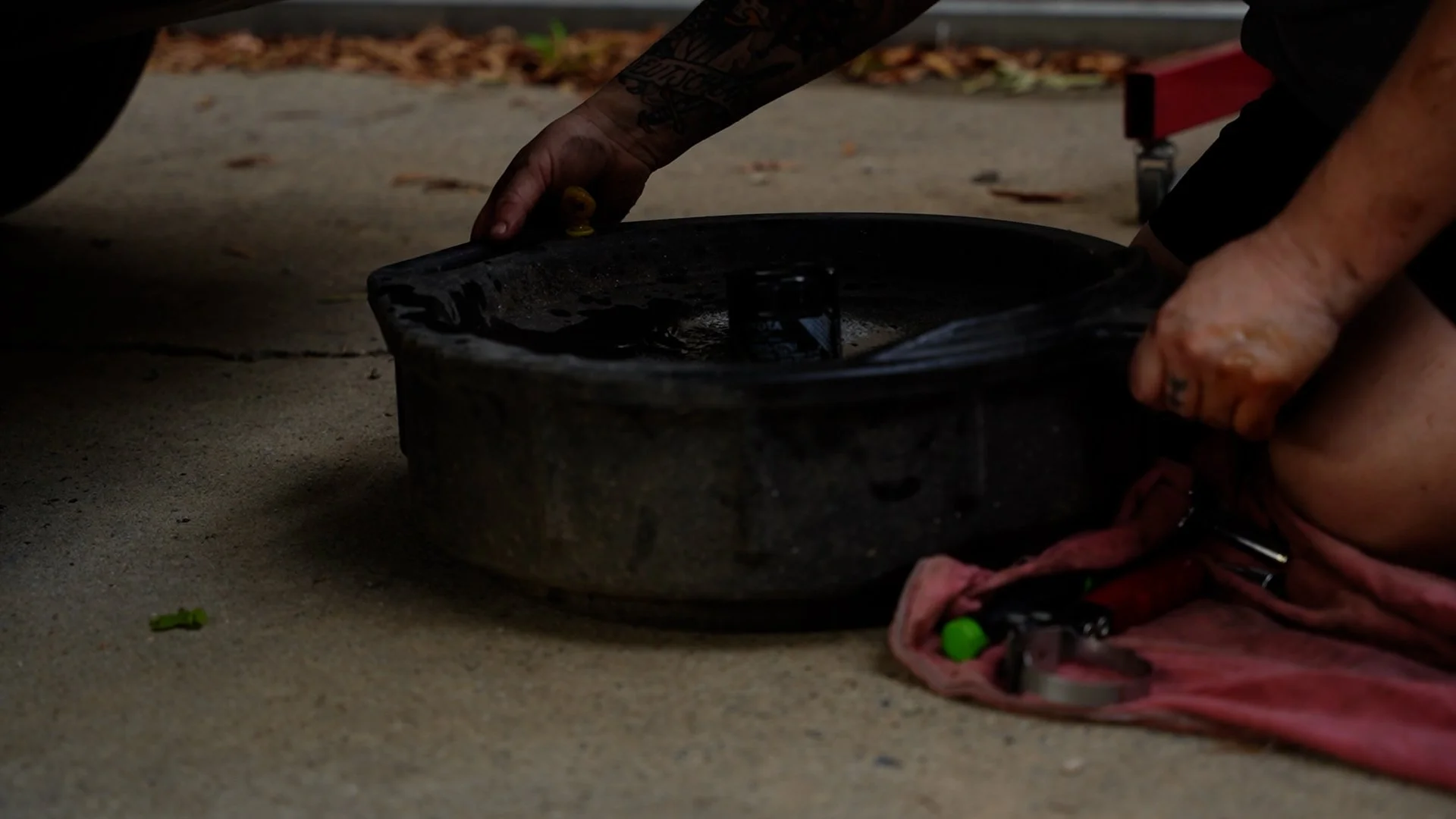
A lot of people
ask me to do an oil change, and I’m like—”I will teach you how to do an oil change. I’d rather give you that power.”
We want a family place.
Getting your car worked on is boring.
I want a little racetrack around it and little power wheels so kids can drive around. I want games in that room—pinball—a place where you want to come and hang out and have some coffee. I want a food truck to be involved eventually.
For more information on the Fluid Community Garage, visit their website